Welcome to the website of the research projects «The Posthuman Wound: Subject and Agency in the North American Literature of the 21st Century» (PID2022-137627NB-I00. 2023-2026), «Contemporary North American Fiction and the 4th Industrial Revolution: From Posthumanity to Privation and Social Change» (PID2019-106855GB-I00. 2020-2023) and «Trauma, Culture and Posthumanity: The Definition of Being in Contemporary American fiction» (FFI2015-63506-P. 2016-2020).
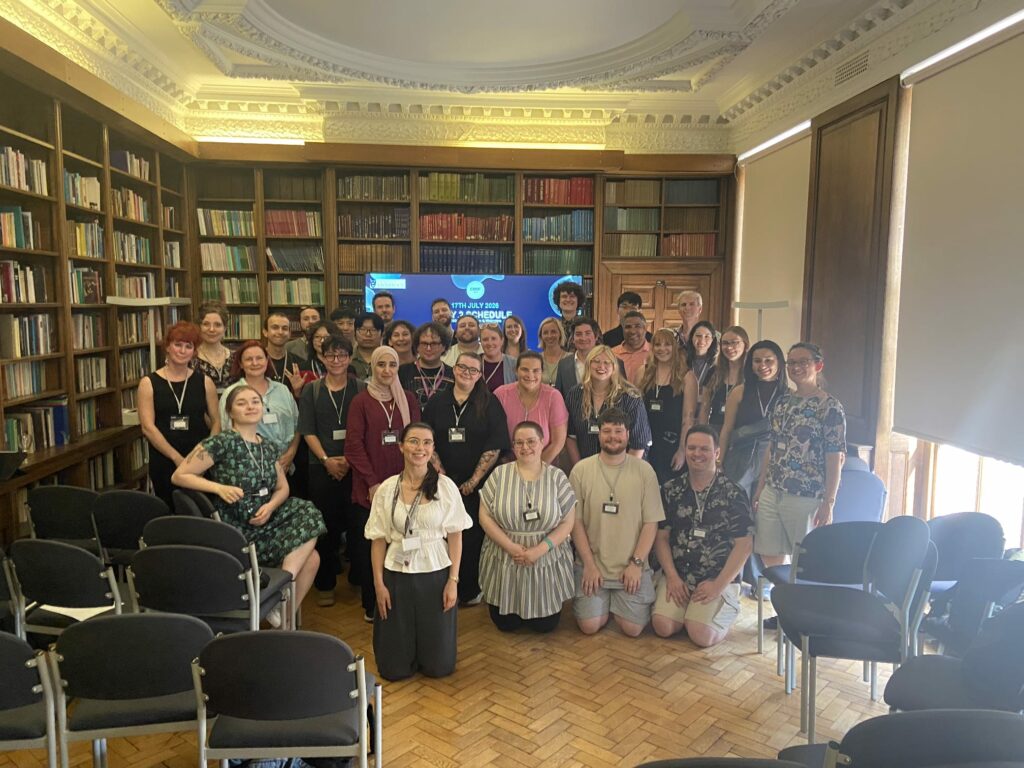
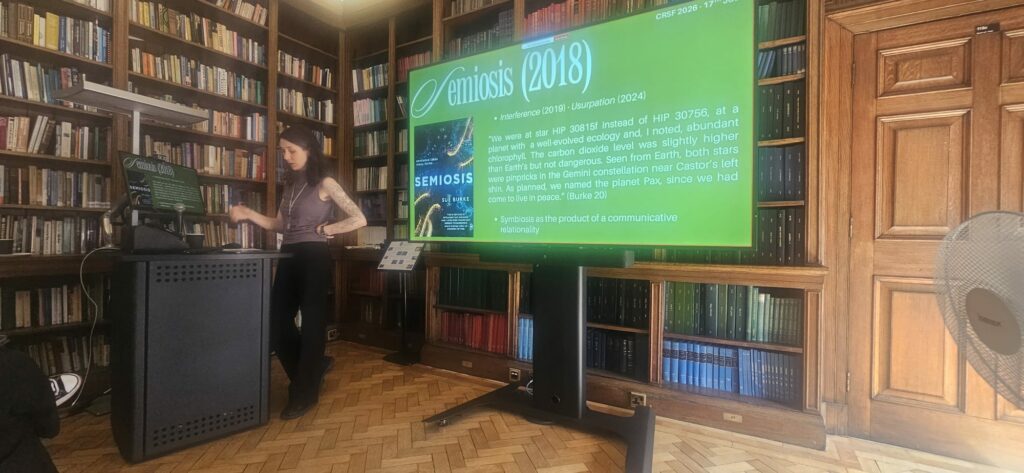
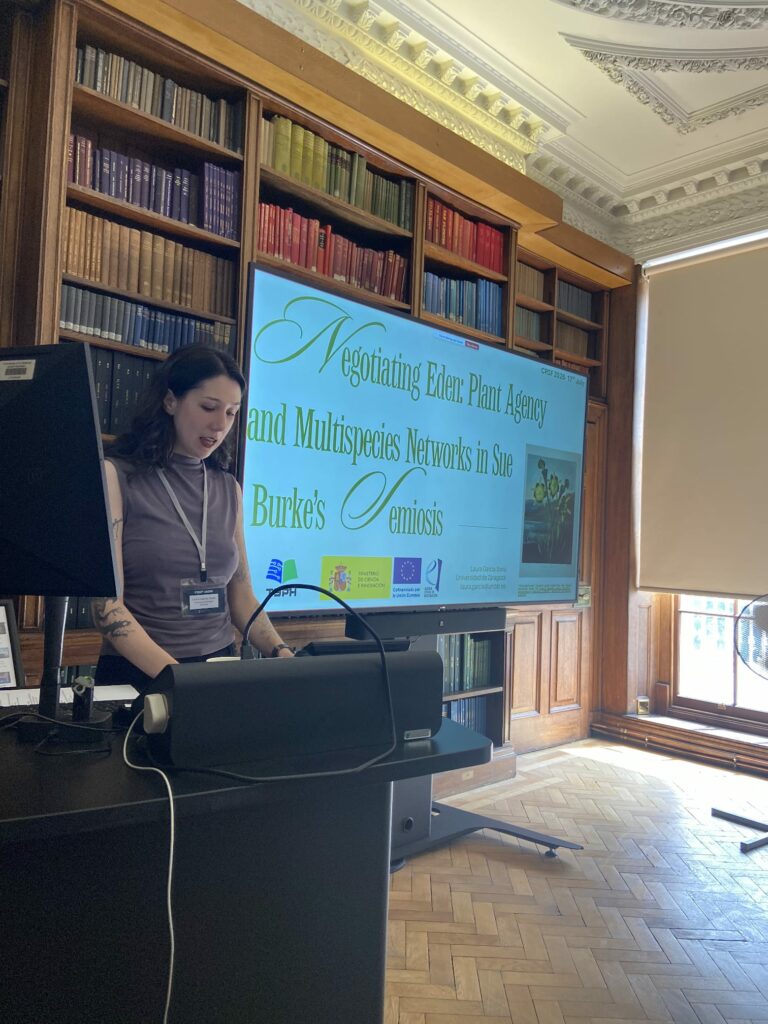
We are delighted to announce that our predoctoral researcher Laura García Soria participated in the Current Research in Speculative Fiction (CRSF) Conference 2026, hosted by the University of Liverpool from 16 to 17 July 2026.
Laura presented her paper, titled “Plant agency and multispecies networks in Sue Burke’s Semiosis,” which examines the complex portrayal of plant intelligence and the formation of multispecies alliances in contemporary science fiction. Her work contributes to the growing field of posthuman plant studies, exploring how speculative narratives challenge anthropocentric views of agency and relationality.
The CRSF conference is a key international forum for scholars working across all modes of speculative fiction. We warmly congratulate Laura on her successful presentation and for representing the TYPH research group in Liverpool! 🌿🎓
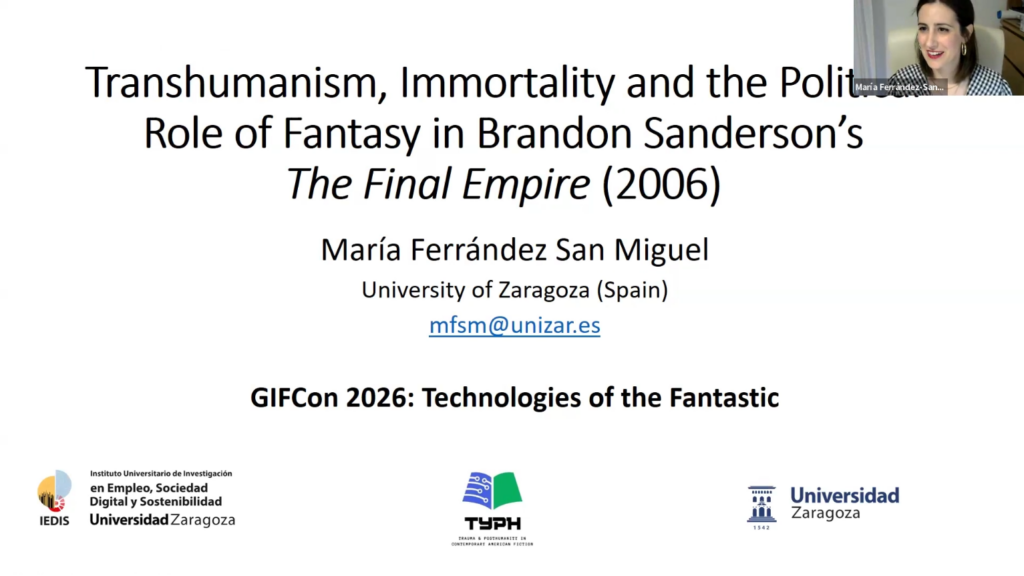
We are delighted to announce that our team member María Ferrández San Miguel participated in Glasgow International Fantasy Conversations (GIFCon) 2026, an international conference hosted online by the University of Glasgow’s Centre for Fantasy and the Fantastic from 13 to 15 May 2026.
This year’s conference theme, “The Technologies of the Fantastic,” brought together scholars from around the world to examine the complex relationships between magic, science, technology, and the fantastic across literature, media, and culture.
As part of the programme, María presented her paper:
“Transhumanism, Immortality and the Political Role of Fantasy in Brandon Sanderson’s The Final Empire (2006).”
Her presentation explored how Sanderson’s novel engages with questions of transhumanism and immortality, while highlighting fantasy’s capacity to interrogate political power, social structures, and technological imaginaries. The paper contributed to broader conversations about how contemporary fantasy literature reflects and challenges evolving understandings of humanity and technological transformation.
We congratulate María on her participation and thank the organizers of GIFCon 2026 for creating a stimulating forum for scholarly exchange and interdisciplinary dialogue.
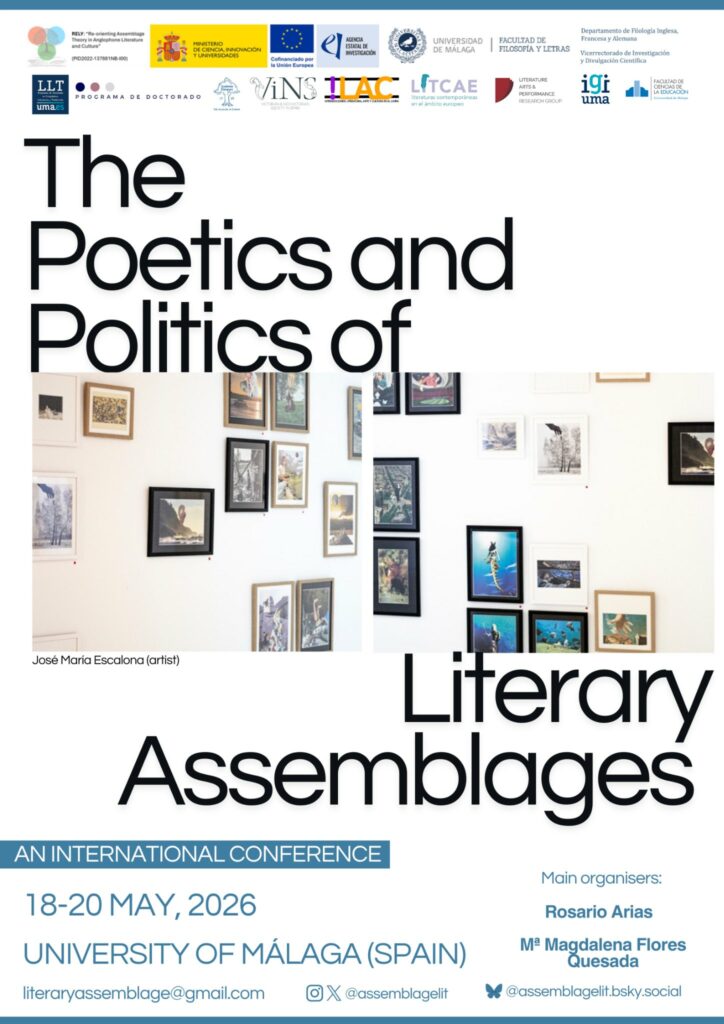
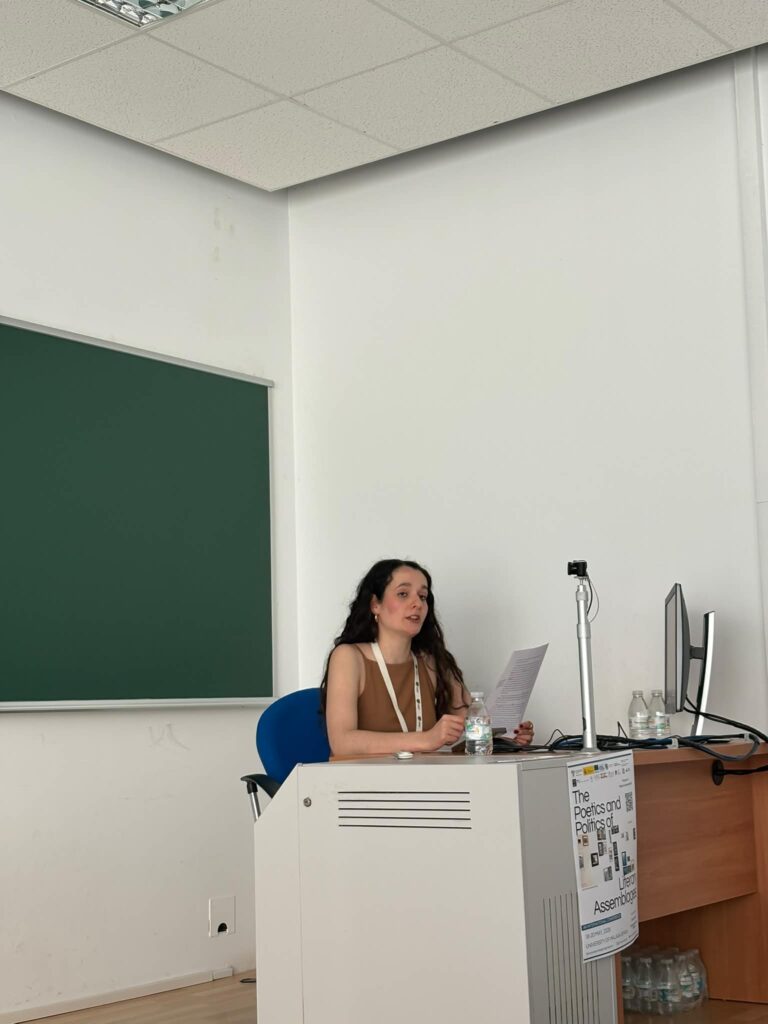
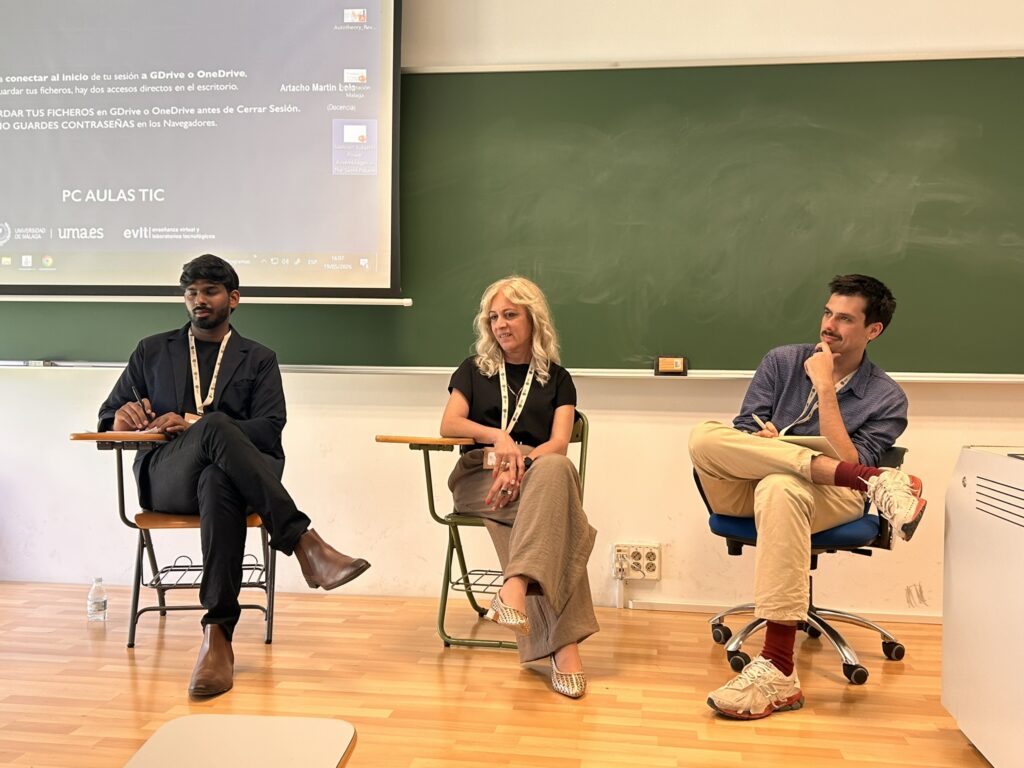
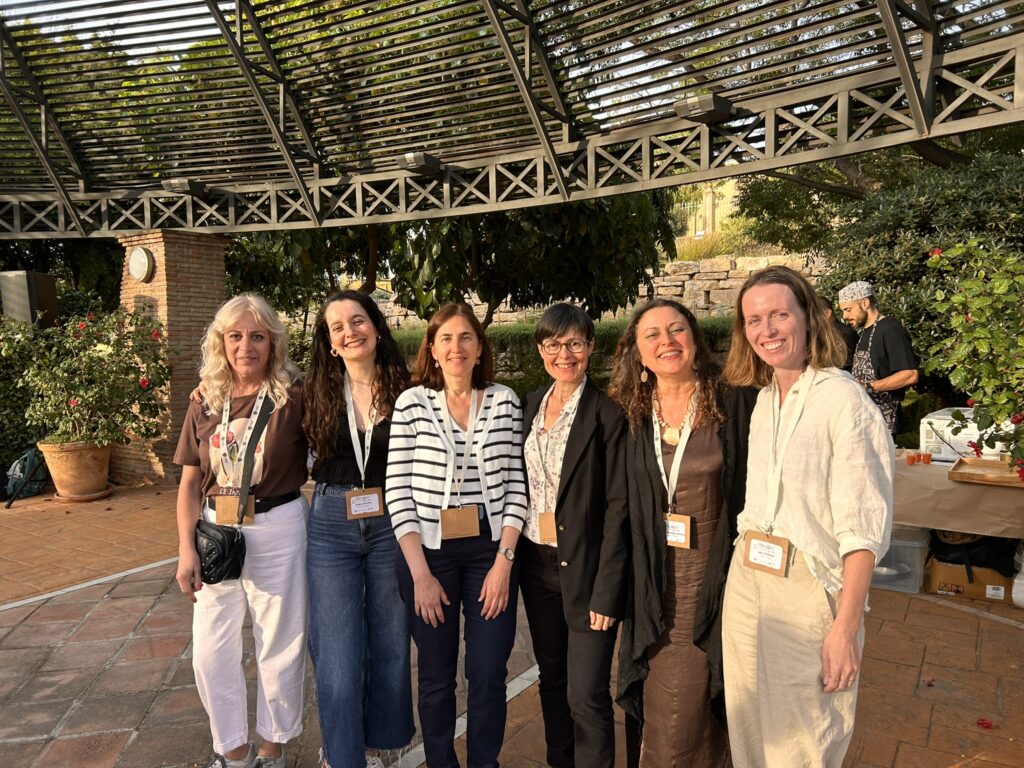
We are delighted to share that several members of our research group have taken part in the international conference The Poetics and Politics of Literary Assemblages, hosted by the University of Málaga. This event brings together scholars working at the intersection of literary studies, assemblage theory, posthumanism, and contemporary critical thought.
Across the three days of the conference, our team will contribute to key discussions on posthuman subjectivity, care, narrative experimentation, and more-than-human relationality. Below is a list of our members’ papers, presented in order of appearance in the programme.
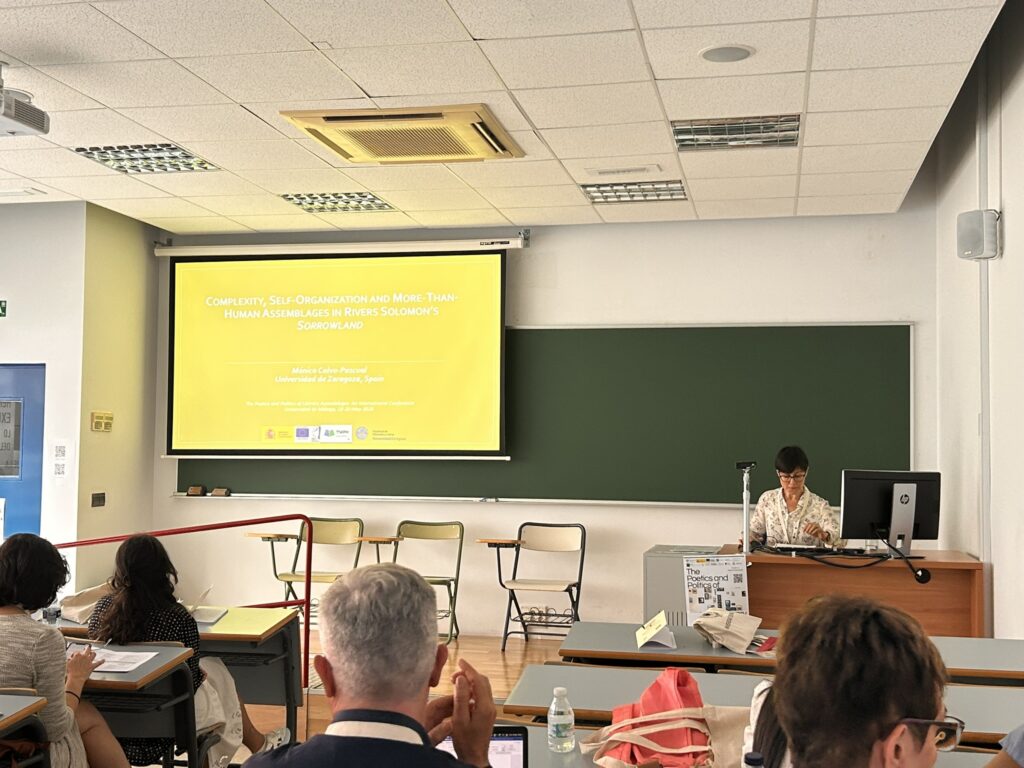
Mónica Calvo Pascual
“Complexity, Self-Organization and More-than-human Assemblages in Rivers Solomon’s Sorrowland” In this paper, Calvo Pascual examines the intersections of complexity theory and posthumanism, analysing how Sorrowland articulates non-human agency and emergent forms of relationality.
Ana Chapman
“Dreams and Sleep in Contemporary Science-Fiction: An Aesthetic Response to the Fear of Techno-Human Assemblages” Chapman explores how contemporary science fiction mobilises dreamscapes and sleep as narrative strategies to engage with anxieties surrounding techno-human entanglements.
María Abizanda-Cardona
“‘I was a collage myself, flesh and machine’: Posthuman Assemblages of Care in Lincoln Michel’s The Body Scout (2021)” This paper analyses the articulation of care within posthuman frameworks, focusing on embodiment, vulnerability, and relationality in Michel’s biocapitalist dystopia.
Sonia Baelo Allué
“Assembling Trauma: Human-Machine Narrative Entanglements in Vauhini Vara’s ‘Ghosts’” Baelo Allué examines how trauma is mediated through digital and algorithmic forms, foregrounding the entanglement of human experience and machine-generated narrative.
Esther Muñoz González
“The Möbius Loop as Narrative Form in Catherine Lacey’s The Möbius Book” This paper investigates the Möbius loop as a structural and conceptual device, highlighting its implications for narrative temporality, selfhood, and textual assemblage.
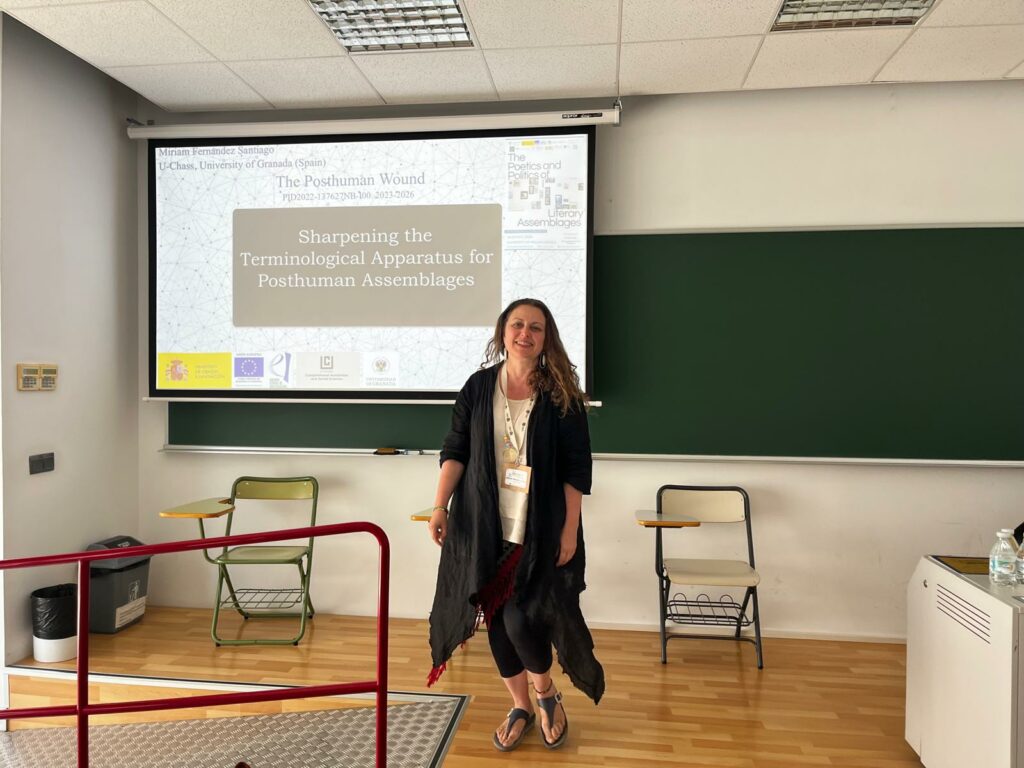
Miriam Fernández Santiago
“Sharpening the Terminological Apparatus for Posthuman Assemblages” Fernández Santiago offers a theoretical intervention aimed at refining and clarifying the conceptual vocabulary used in posthuman assemblage studies.
Lucía Bennett Ortega
“The Shape of Memory at the Edge of the Human in Richard Powers’ Playground (2024)” Bennett Ortega explores the representation of memory in relation to ecological and posthuman concerns, analysing how Powers’ novel reimagines cognition beyond the human.
We are pleased to announce that several members of our research group will participate in the VI Seminar in English Studies (SEING VI), hosted by the Universidad de Zaragoza. This doctoral seminar provides a valuable platform for early-stage researchers to present their work, exchange ideas, and engage with current debates in English Studies .
Under the theme “Research as Resistance in a World at Odds,” this year’s edition foregrounds the role of academic inquiry in responding to contemporary global challenges . Our team contributes to these discussions through papers that address surveillance, race, posthumanism, and the limits of representation.
Below is a list of our members’ papers:
Javier Álvarez
“Rethinking Utopia in Times of Crisis: Posthuman Ethics and Alternative Futures in Contemporary Fiction”.
María Abizanda-Cardona
“Big Brother meets big business: The Biopolitics of Surveillance Capitalism in Rob Hart’s The Warehouse (2019)” This paper examines the convergence of corporate power and surveillance technologies, analysing how Hart’s novel depicts the datafication of subjectivity and the expansion of biopolitical control under late capitalism.
Aurora Rodríguez Bermejo Fraile
“Gothic Themes and the Black Body in Rivers Solomon’s Model Home” Rodríguez Bermejo Fraile explores how contemporary Gothic reconfigures racialised embodiment, foregrounding the intersections of horror, identity, and systemic oppression.
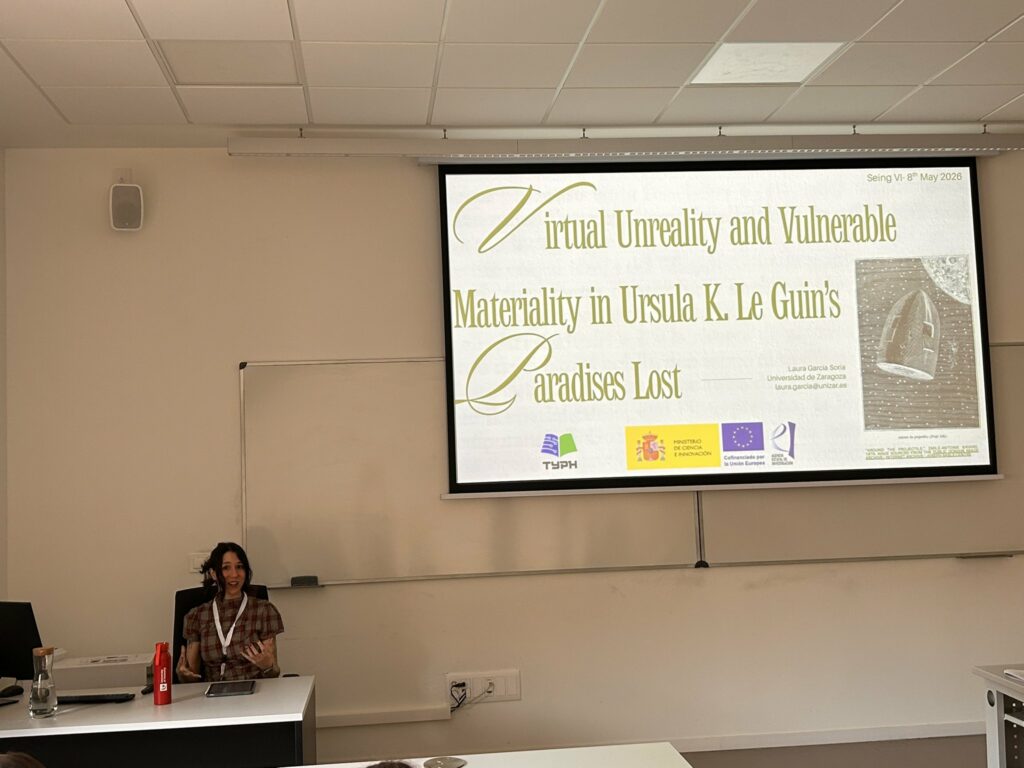
Laura García Soria
“‘No use living without delight’: Virtual Unreality and Vulnerable Materiality in Ursula K. Le Guin’s Paradises Lost (2002)” This paper investigates the tension between virtuality and embodiment, analysing how Le Guin reasserts material vulnerability in speculative narratives of simulated experience.
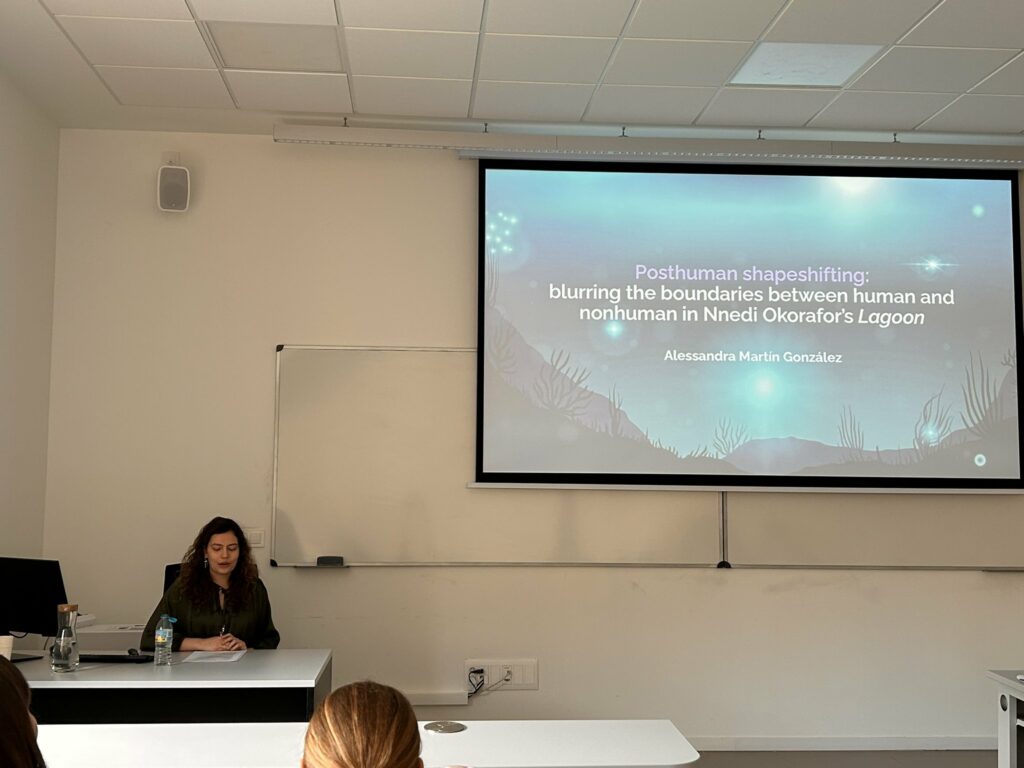
Alessandra Martín González
“Posthuman Shapeshifting: Blurring the Boundaries Between Human and Nonhuman in Nnedi Okorafor’s Lagoon” Martín González examines shapeshifting as a posthuman strategy that destabilises fixed ontologies and reimagines human–nonhuman relations within Afrofuturist frameworks.
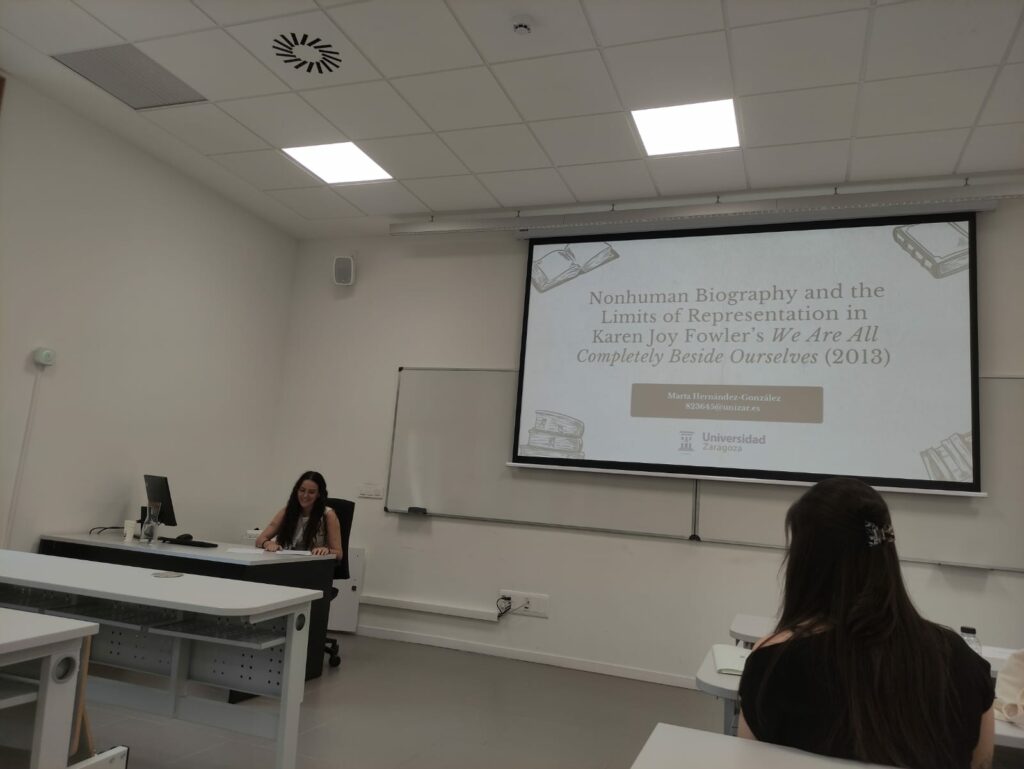
Marta Hernández González
“Nonhuman Biography and the Limits of Representation in Karen Joy Fowler’s We Are All Completely Beside Ourselves” This paper addresses the challenges of narrating nonhuman lives, interrogating the ethical and epistemological limits of representation in literary depictions of animal subjectivity.
Our group’s participation in SEING VI highlights our ongoing engagement with contemporary critical theory and interdisciplinary approaches to literature. By addressing issues such as surveillance, embodiment, and posthuman relationality, these papers contribute to broader conversations about the role of the humanities in a rapidly changing world.
We look forward to an enriching exchange of ideas in Zaragoza.
El grupo de investigación se complace en anunciar la participación de nuestro investigador Rubén Peinado Abarrio (UNIZAR) en el II Congreso Internacional de Investigación del Patrimonio (CONIVIP 2025), celebrado en la Universidad San Jorge (Zaragoza) los días 27 y 28 de noviembre. Este congreso reúne a especialistas de diversas disciplinas para explorar el patrimonio cultural, artístico, literario y audiovisual desde enfoques contemporáneos, con especial atención a los retos que plantea la era digital y las nuevas formas de memoria colectiva.
La programación de CONIVIP 2025 destaca por su carácter multidisciplinar, incluyendo sesiones dedicadas al patrimonio fotográfico y audiovisual, historia del arte y arquitectura, criminología cultural, museos e industrias culturales, así como al patrimonio lingüístico y literario.
Dentro de esta última sección —Patrimonio Lingüístico y Literario— Rubén Peinado presentará hoy, de 17:00 a 17:10, la comunicación titulada: “La recuperación del patrimonio en la literatura de trauma: el caso de Sarajevo”.
La ponencia forma parte de un panel que aborda distintas líneas de investigación sobre el patrimonio literario, la transmisión cultural a través de la literatura infantil, el papel de las lenguas en la enseñanza y la proyección del legado literario en contextos educativos e históricos. Su contribución dialoga con estas perspectivas al situar la literatura de trauma como una herramienta clave en los procesos de reconstrucción cultural y memoria colectiva.
CONIVIP 2025 ofrece un espacio excepcional para la reflexión crítica en torno al patrimonio y sus desafíos contemporáneos. La diversidad de las comunicaciones, junto con la participación de investigadoras e investigadores procedentes de numerosas universidades, convierte este encuentro en una plataforma ideal para compartir proyectos y abrir nuevas líneas de colaboración.
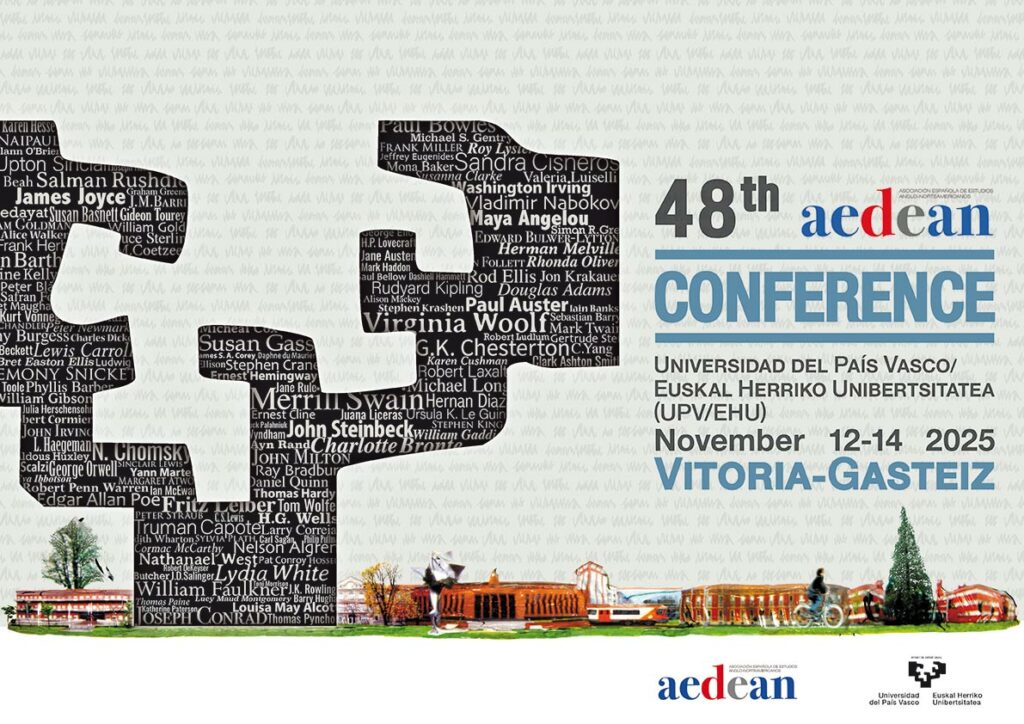
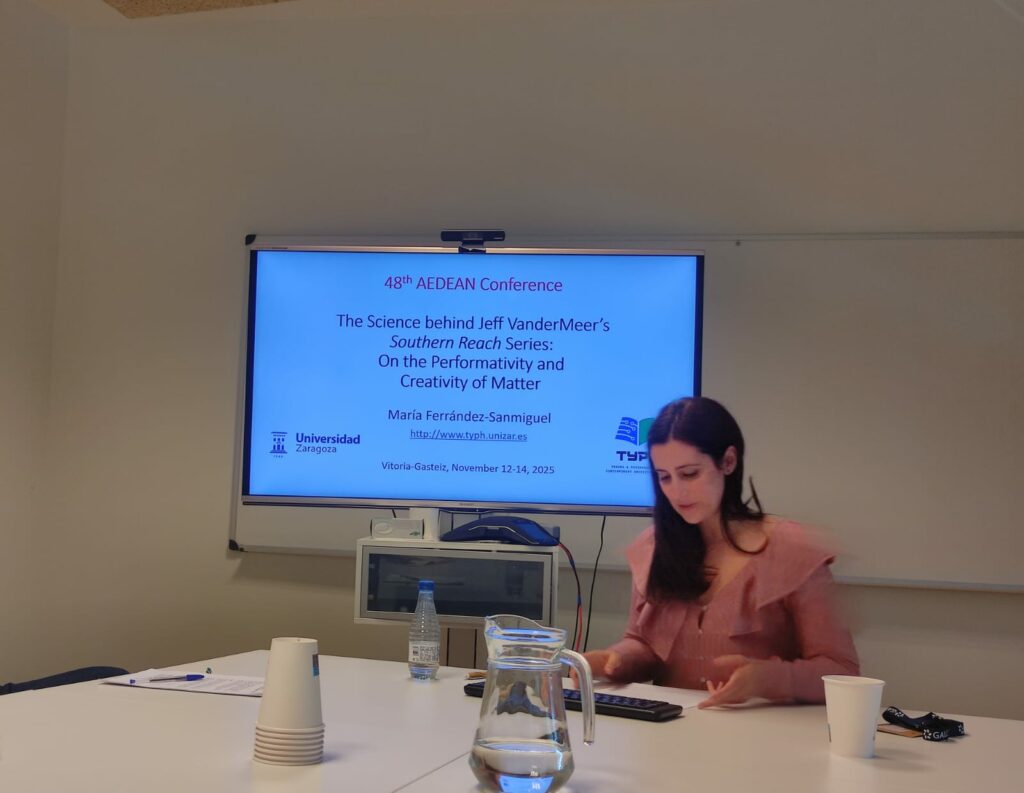
We’re delighted to share that our team member María Ferrández-San Miguel took part in the 2025 AEDEAN Conference, contributing to the rich discussions on contemporary literature and posthuman studies. 🌍📚
María delivered the paper “The Science behind Jeff VanderMeer’s Southern Reach Series: On the Performativity and Creativity of Matter,” where she explored the intersections between science, ecology, and posthuman ontology in VanderMeer’s acclaimed trilogy. Her analysis highlighted how The Southern Reach reimagines matter as an active, creative force—an idea central to posthumanist and new materialist frameworks.
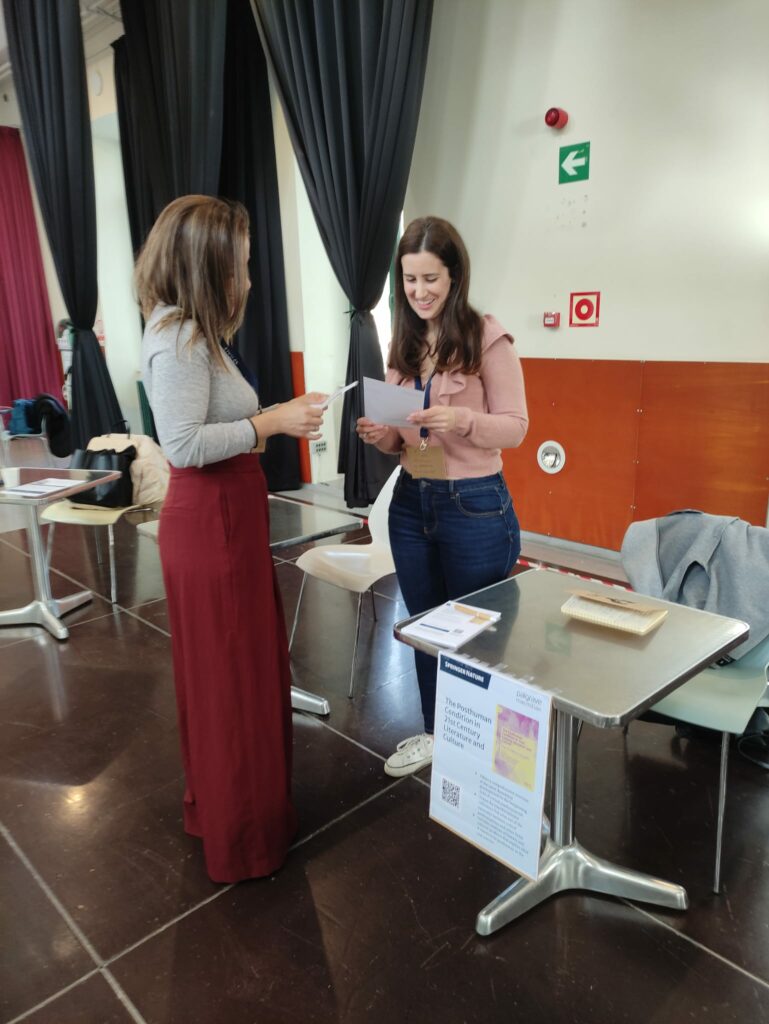
In addition to her presentation, María also introduced the recently published volume The Posthuman Condition in 21st Century Literature and Culture: Interdisciplinary Insights (Palgrave Macmillan, 2025), co-edited with Esther Muñoz-González and Carmen Laguarta-Bueno. The book gathers contributions from international scholars exploring posthumanism across literature, film, and culture.
It was an inspiring event that once again showcased the vibrant dialogue between literary studies, philosophy, and science—core to our group’s ongoing research. ✨
We are delighted to announce the upcoming seminar “Posthumanismo y Estética Digital del S. XXI”, to be delivered by our team member Miriam Fernández Santiago on December 17, 2025, at 11:30 a.m. in Aula Ana Pardo (Facultad de Filosofía y Letras, Universidad de Zaragoza).
In this session, Miriam will delve into the cultural and philosophical transformations that define what has been called the Third Media Age (Li) or the Fourth Industrial Revolution (Schwab). These profound shifts, marked by both socioeconomic and technological change, resonate with the key tenets of Posthumanism—both in its critical and transhumanist strands.
As she explains, the variety of labels proposed for our current aesthetic framework—post-postmodernism, digimodernism, metamodernism, new sincerity, among others—attests to the difficulty of identifying a stable paradigm for the new millennium.
To address this, Miriam proposes the concept of the “Neoapolíneo”, an aesthetic paradigm that captures the ergodic (participatory) and synthetic dimensions of 21st-century digital culture. Her talk will highlight how this framework fits within agential materialism, drawing connections to the principles of quantum physics.
This promises to be a stimulating exploration of how posthuman philosophy and digital aesthetics intersect in contemporary cultural production. ✨
📅 Date: December 17, 2025 🕦 Time: 11:30 A.M. 📍 Venue: Aula Ana Pardo, Facultad de Filosofía y Letras
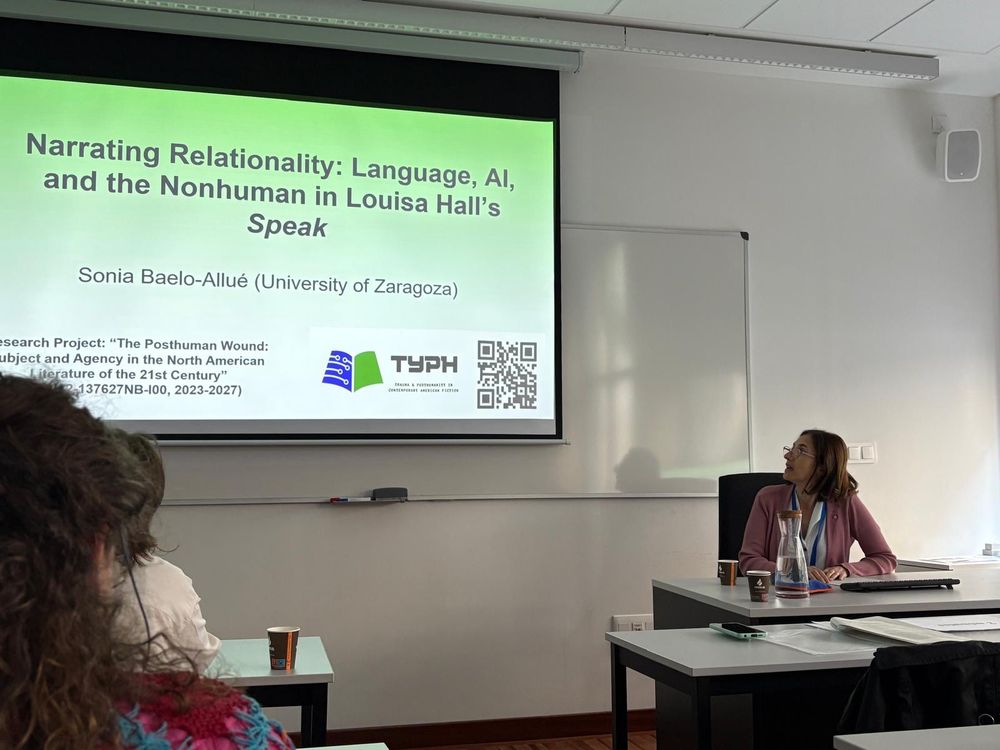
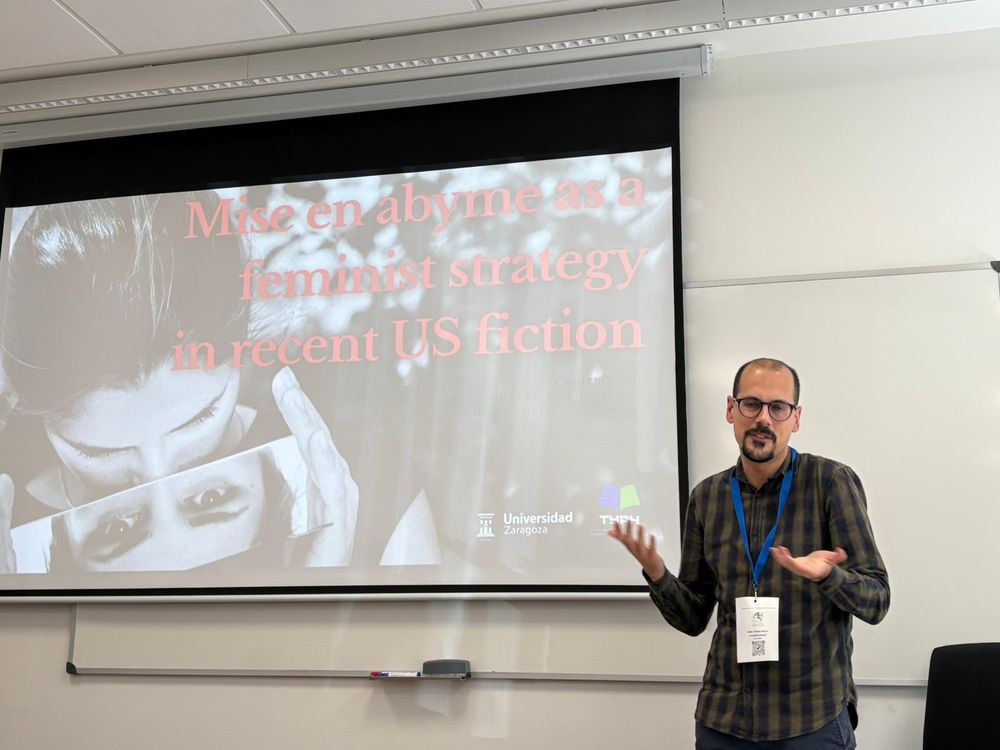
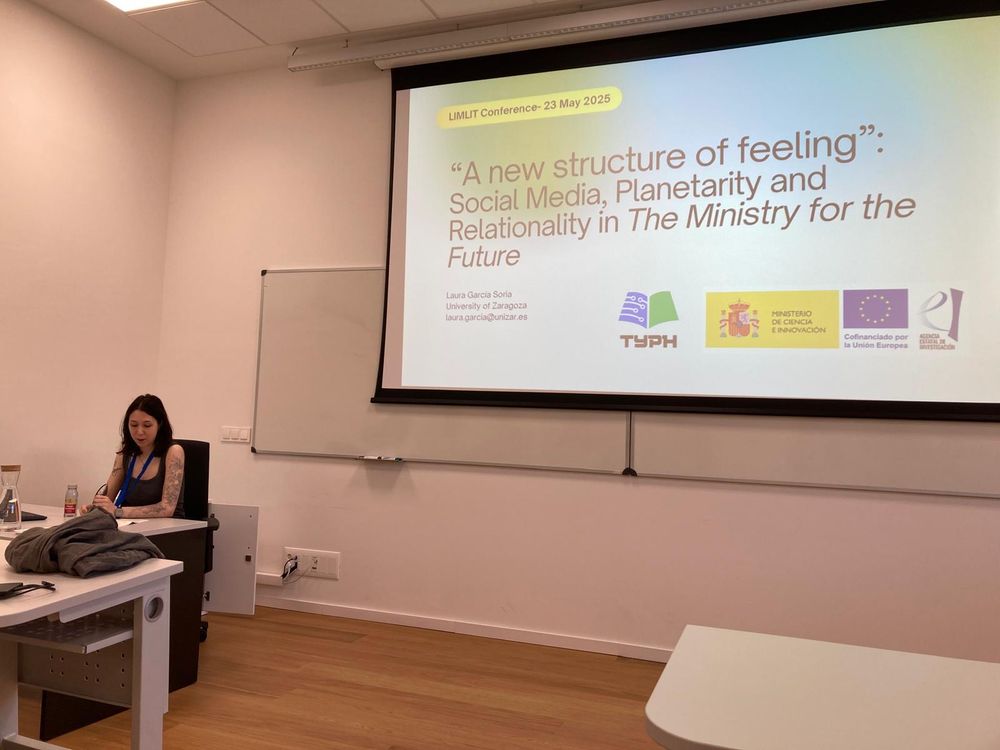
📢 This week, several of our team members took part in the #LimLitConference2025, organized by our colleagues from the LIMLIT Research Group at the University of Zaragoza. It was an inspiring week full of vibrant discussions, critical reflections, and interdisciplinary exchanges! ✨
Throughout the conference, our researchers presented their latest work exploring posthumanism, relationality, and contemporary American literature:
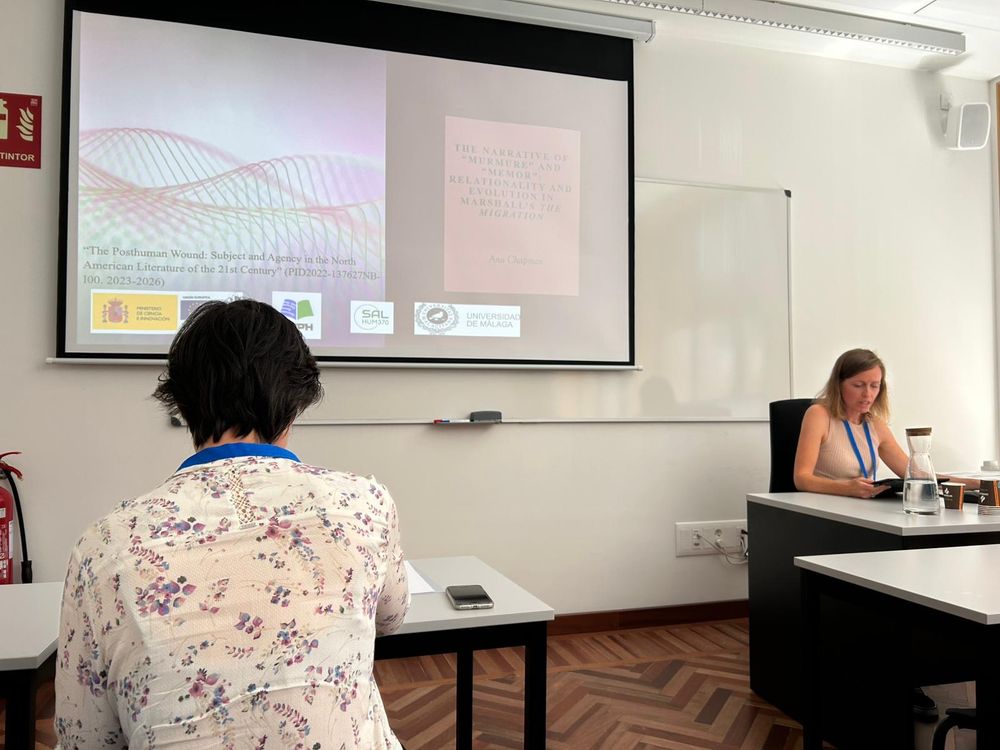
📃 Ana Chapman delivered the paper “The Narrative of ‘Murmure’ and ‘Memor’: Relationality and Evolution in Marshall’s The Migration.”
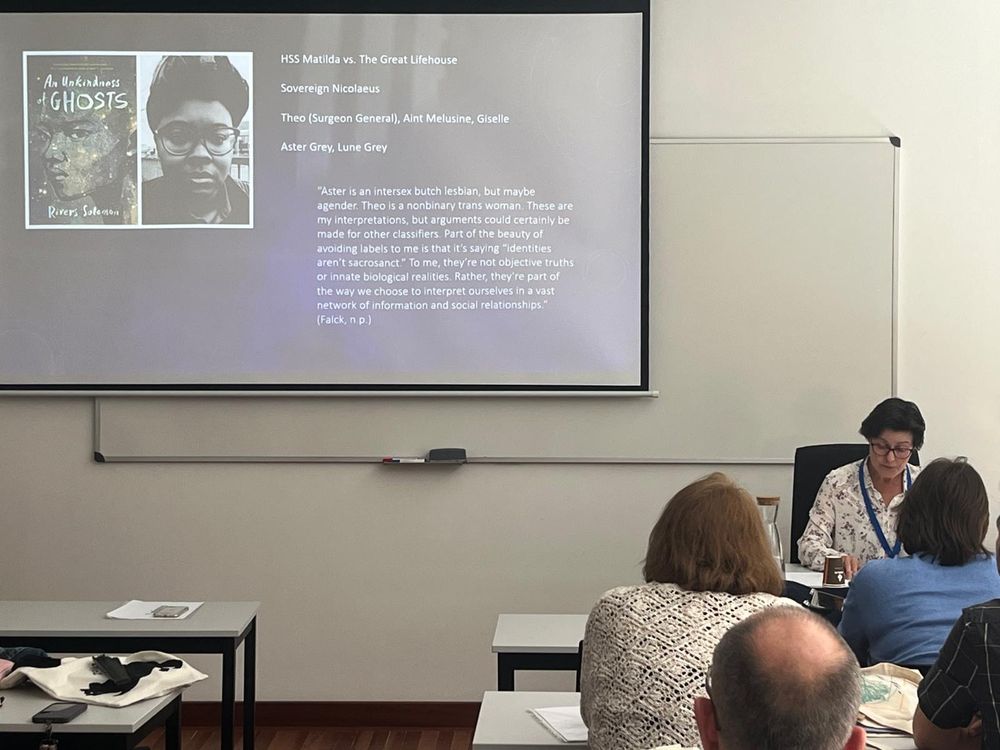
📃 Our co-PI Mónica Calvo-Pascual presented “Body Agency and Radical Kinship in Rivers Solomon’s An Unkindness of Ghosts.”
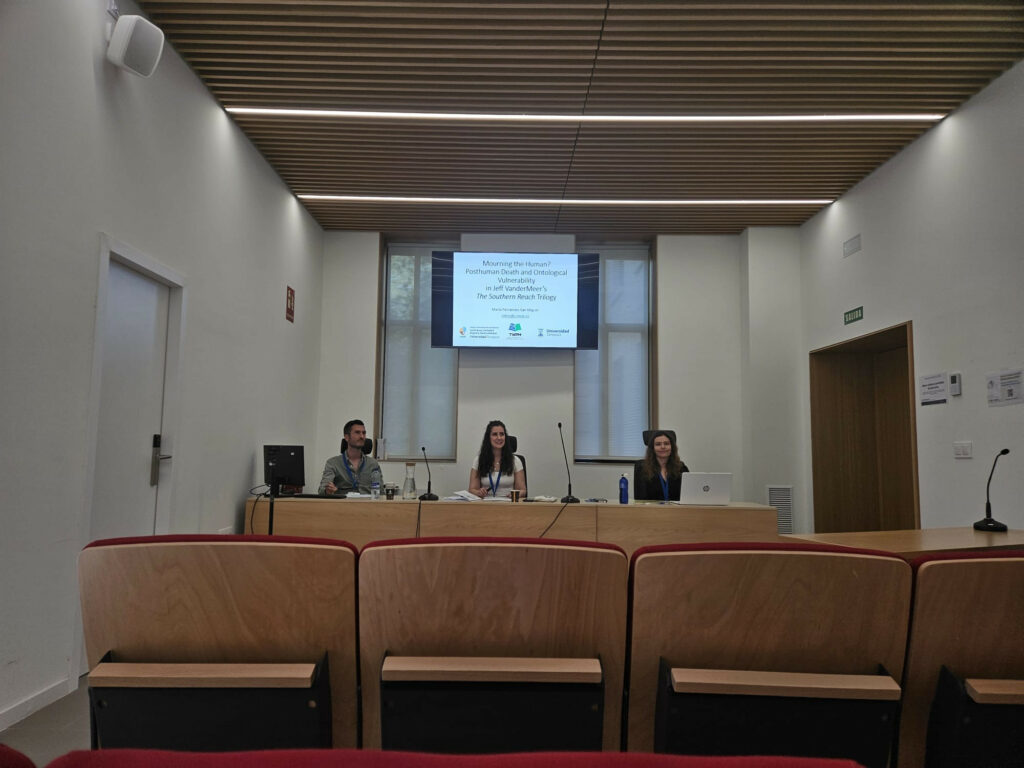
📄 María Ferrández-San Miguel shared her work “Mourning the Human? Posthuman Death and Ontological Vulnerability in Jeff VanderMeer’s The Southern Reach Trilogy.”
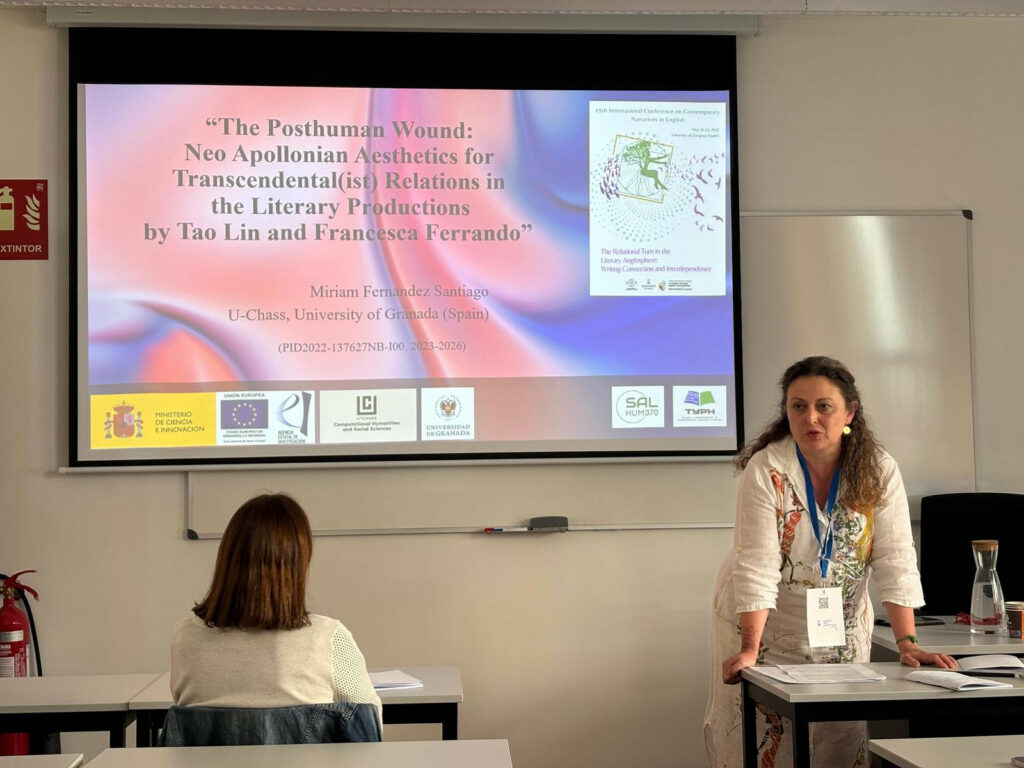
📄 Miriam Fernández-Santiago discussed “The Posthuman Wound: Neo-Apollonian Aesthetics for Transcendental(ist) Relations in the Literary Productions by Tao Lin and Francesca Ferrando.”
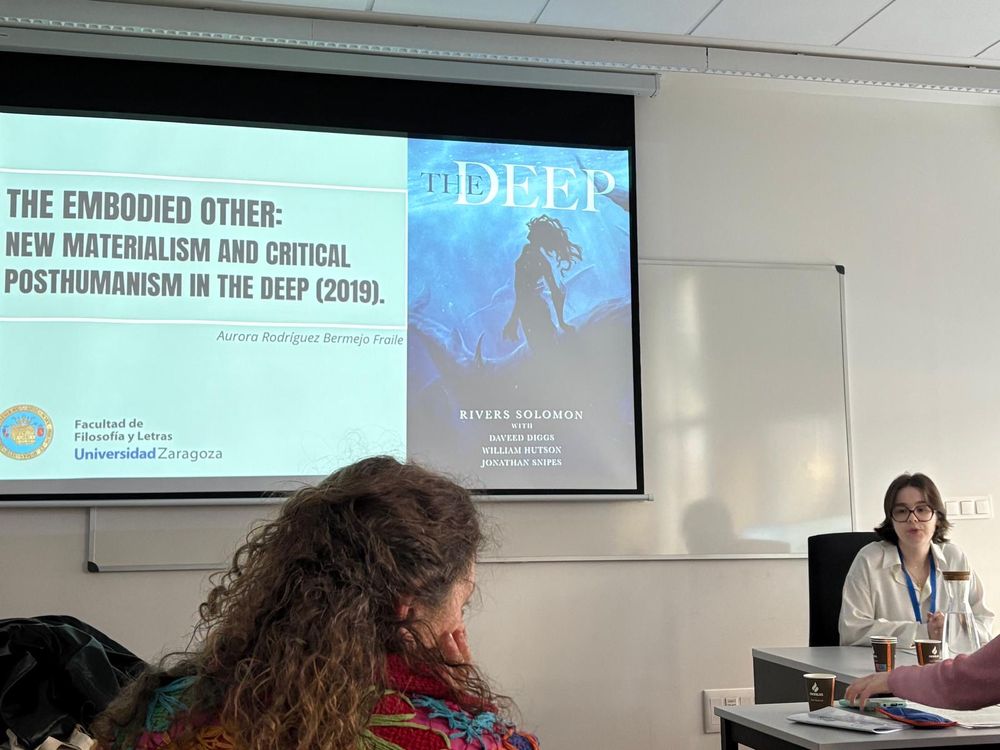
On day 2, our doctoral student Aurora Rodríguez-Bermejo Fraile presented “The Embodied Other: New Materialism and Critical Posthumanism in The Deep (2019).”
📄 In the same panel, Esther Muñoz-González delivered “Resurrected Identities: The Posthuman and Gothic Relationality in Kelly Link’s The Book of Love.”
📄 Our co-PI Sonia Baelo-Allué explored “Narrating Relationality: Language, AI, and the Nonhuman in Louisa Hall’s Speak.”
📄 Rubén Peinado-Abarrio presented “Mise en abyme as a Feminist Strategy in Recent US Fiction.”
On day 3, our predoctoral researcher Laura García-Soria delivered “‘A New Structure of Feeling’: Social Media, Planetarity and Relationality in The Ministry for the Future.”
The conference wrapped up after three intense days of engaging talks and meaningful academic exchanges. It’s been a pleasure to share our research and connect with colleagues from Zaragoza and beyond.
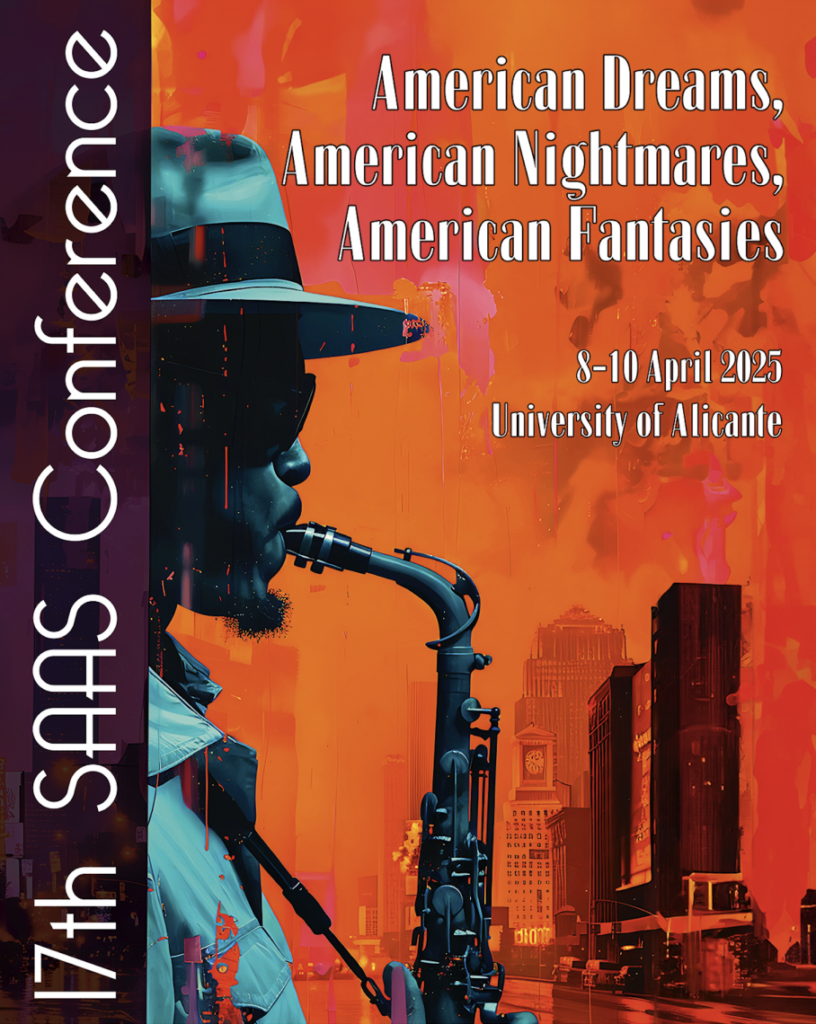
This week, the Spanish Association of American Studies will host its 17th Conference in Alicante!
As every edition, our team members can’t miss this biannual appointment with American Studies in Spain, and presented their research across the different pannels.
Our team member Miriam Fernández-Santiago chaired the panel “Posthuman fantasies: Dreaming America along the utopian-dystopian arch”. In it, our team member Esther Muñoz González delivered the paper “Disrupting Identity: Posthumanism and the Evolution of the Gothic in Catherine Lacey’s Pew (2020)”. In session 2, Rubén Peinado Abarrio presented the paper “New Materialism and the Wounded Self in Ruth Ozeki’s The Book of Form and Emptiness”. In session 3, our predoctoral researcher Lucía Bennet Ortega delivered the paper ““I Only Want My Life Back”: Spectacle, Surveillance, and Mass Media in Richard Powers’ Generosity”. In session 4, Carmen Laguarta Bueno delivered the paper “Ted Chiang’s “It’s 2059, and the Rich Kids Are Still Winning”: Transhumanism, Cognitive Enhancement, and the American Dream”. Lastly, Ana Chapman presented the paper “Dreaming in the Digital Age: Constructing a Personal Narrative in The Sleepless”.
Besides, our co-PI Mónica Calvo-Pascual chaired the panel “Technological nightmares and post humanity in contemporary US Fiction”. In Session 1, our co-PI Sonia Baelo-Allué delivered the paper “From Dreams to Nightmares: The Posthuman Trauma Novel in 21st century US Fiction”. Then, Mónica Calvo-Pascual delivered the paper “American Nightmares, Trauma and Posthumanity in Rivers Solomon’s Sorrowland”.
We’ve had some very enriching days in Alicante, exchanging with our mates in American Studies. Looking forward to the next edition!
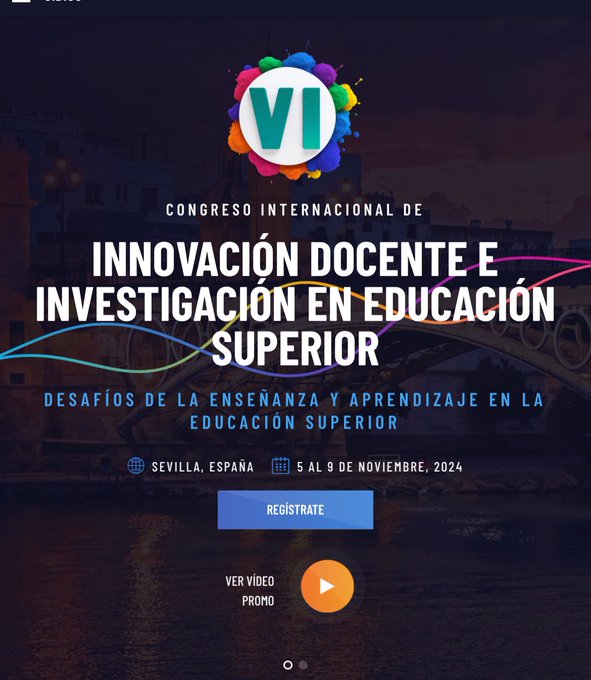
This week, our team members have taken part in the VI Congreso Internacional de Innovación Docente e Investigación en Educación Superior “Desafíos de la Enseñanza y Aprendizaje en la Educación Superior”.
Our team members delivered their papers in the symposium “El impacto de los enfoques pedagógicos post humanistas y las herramientas digitales en la enseñanza de las humanidades”.
Miriam Fernández-Santiago delivered the paper “El alumnado posthumano frente al replicante digital: uso del Chat GPT en la enseñanza de elaboración de ensayos”.
María Abizanda-Cardona delivered the paper “Una aproximación a las habilidades del siglo XXI en el aula EFL desde la pedagogía posthumanista”.
Ana Chapman delivered the paper “La descorporealización posthumana en actividades colaborativas en intercambios virtuales en la enseñanza universitaria”.
Laura Larrodera delivered the paper “Creando redes posthumanas y espacios de vulnerabilidad a través de lo epistolar en el aula de literatura”.
Rubén Peinado-Abarrio delivered the paper “Taller de escritura creativa electrónica como actividad extracurricular para el Grado en Estudios Ingleses”.
Lastly, Sonia Baelo-Allué delivered the paper “La enseñanza de la literatura norteamericana contemporánea desde una perspectiva posthumana: una propuesta didáctica”.
#CIDICOVI was a great forum for applying the insights of our research on posthumanism into education and sharing our thoughts and perspectives on innovation. Our team members have for sure food for thought!