IX Jornadas del Observatorio Permanente de Innovación Docente

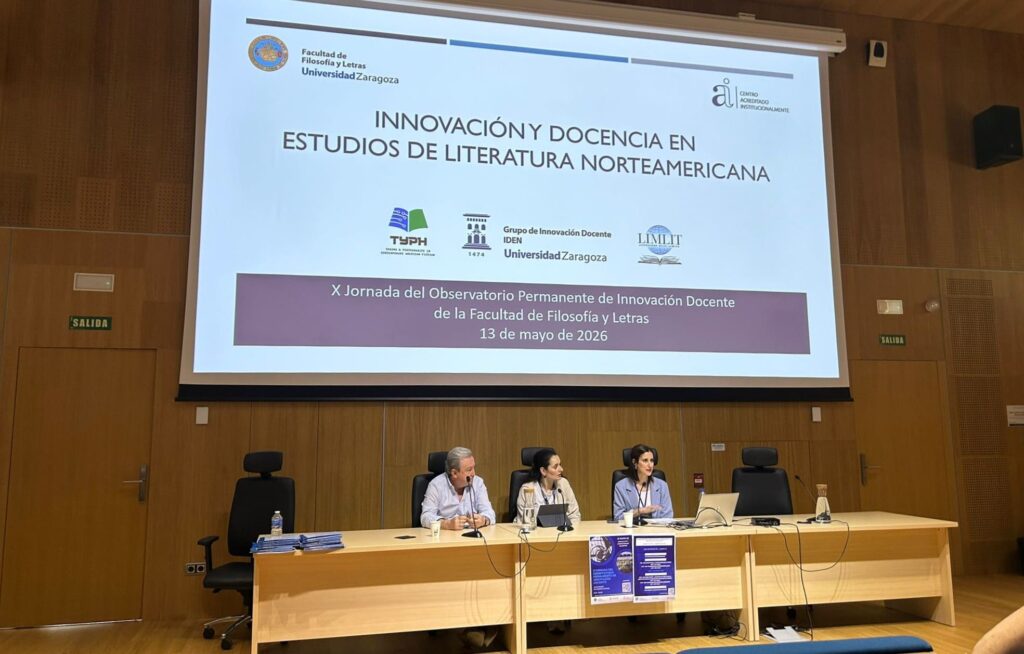
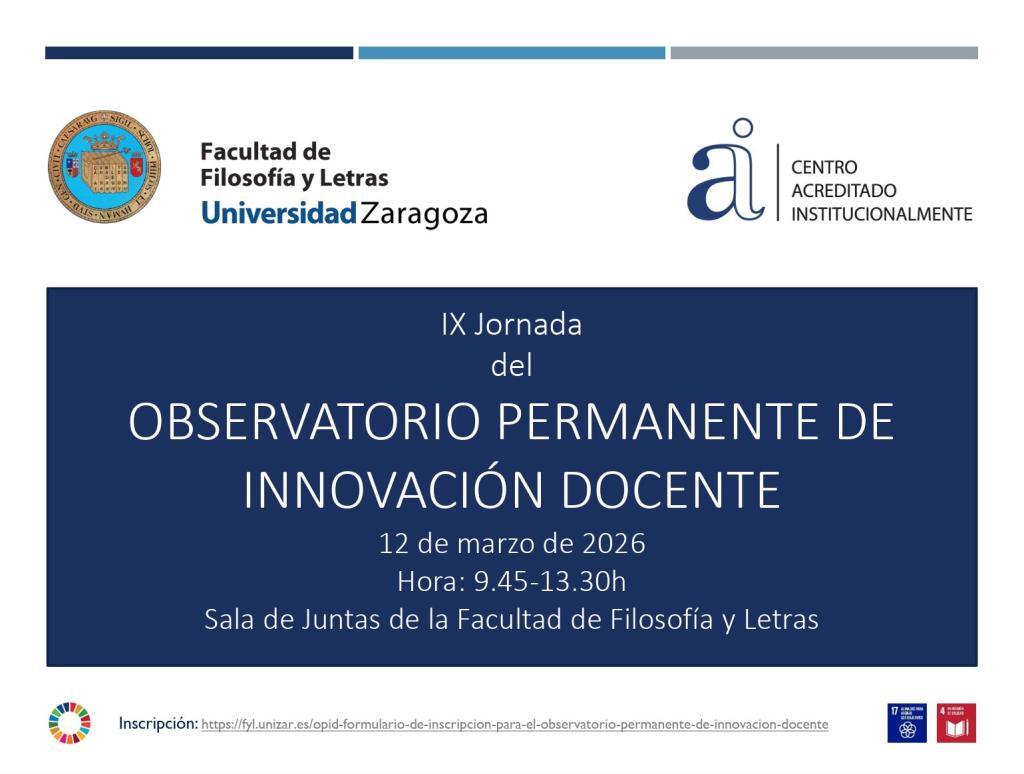
Our research team recently participated in the IX Jornadas del Observatorio Permanente de Innovación Docente, organized at the Universidad de Zaragoza. The event brings together faculty members interested in sharing experiences and best practices in university teaching, particularly those that integrate research and pedagogical innovation.

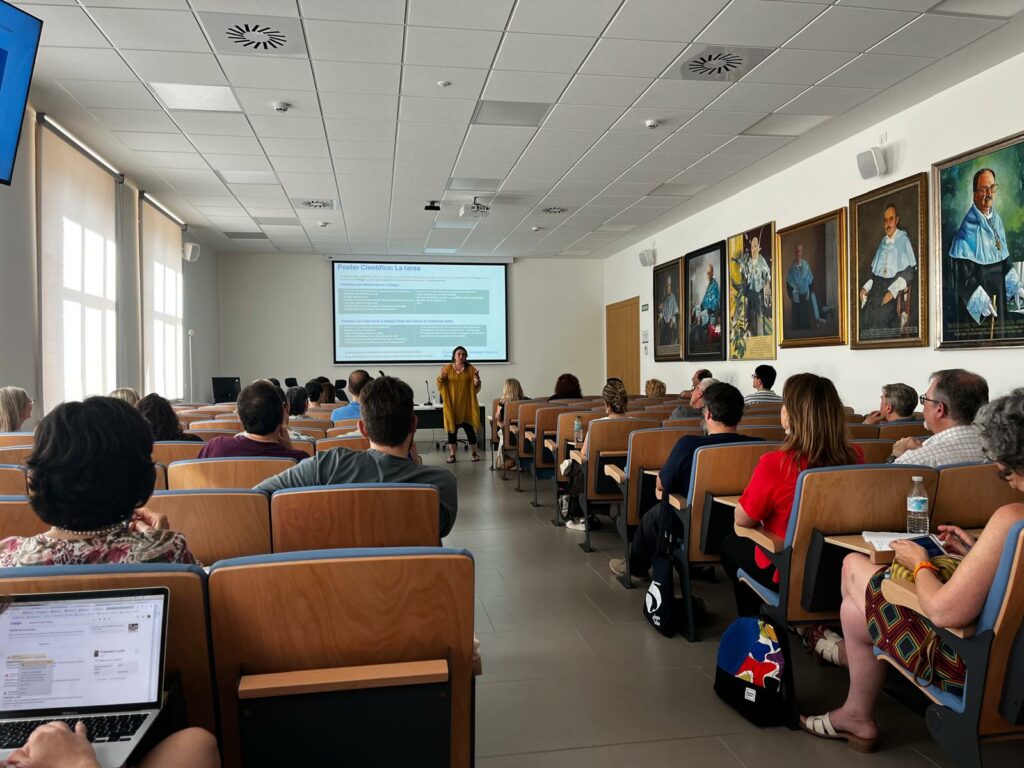
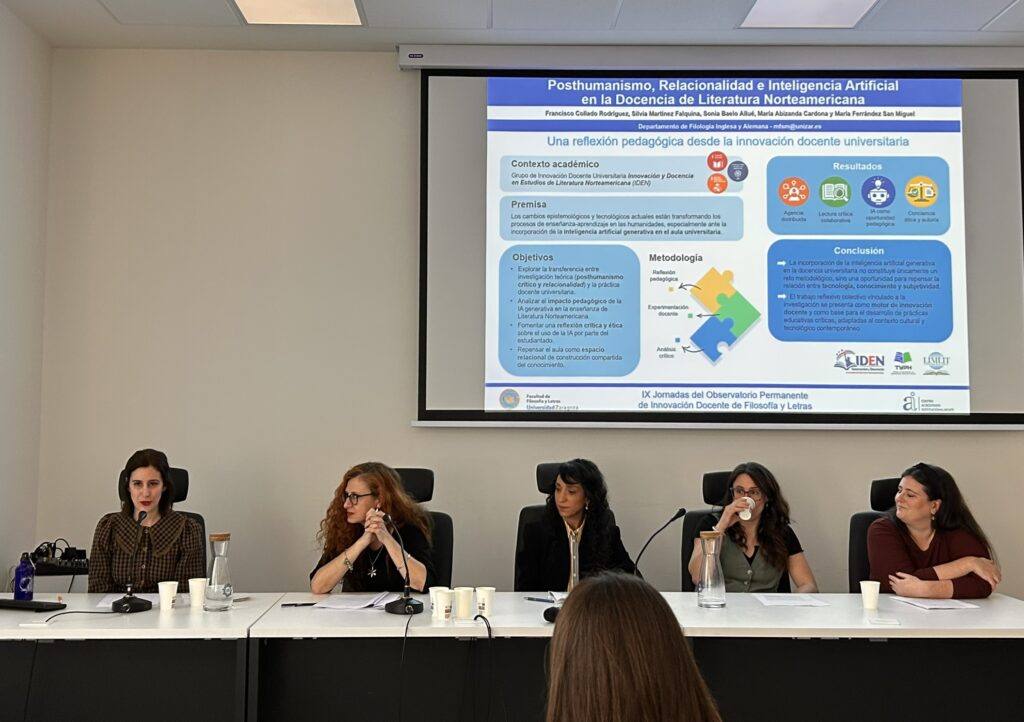
During the poster session, our colleagues M. Ferrández, S. Martínez, S. Baelo, M. Abizanda, and F. Collado presented the contribution: “Posthumanismo, relacionalidad e Inteligencia Artificial en la docencia de literatura norteamericana: una reflexión pedagógica desde la innovación docente universitaria.”

The poster reflects on how emerging theoretical and technological frameworks can reshape literature teaching in higher education. Drawing on posthumanist thought, the project explores relational approaches to knowledge that challenge anthropocentric models of learning and emphasize interconnectedness between humans, technologies, and cultural texts.

At the same time, the proposal considers the growing presence of artificial intelligence tools in the classroom and reflects on how they may be integrated critically into the teaching of American literature. Rather than treating AI merely as a technological aid, the project frames it as a pedagogical opportunity: a way to foster critical thinking, collaborative interpretation, and reflexive engagement with digital tools.

Participating in these jornadas offered a valuable space for dialogue with colleagues across disciplines and reaffirmed the importance of collective reflection on the future of university teaching.

XVIII Jornadas de Innovación e Investigación Educativa

We are delighted to share that our predoctoral researcher María Abizanda-Cardona has presented a conference poster at the XVIII Conference on Teaching Innovation and Educational Research organized by the University of Zaragoza. The presentation took place in the thematic panel “Rethinking Teaching Innovation in the New Regulatory Context”, a space devoted to reflecting on how higher education is adapting to new institutional and pedagogical frameworks.

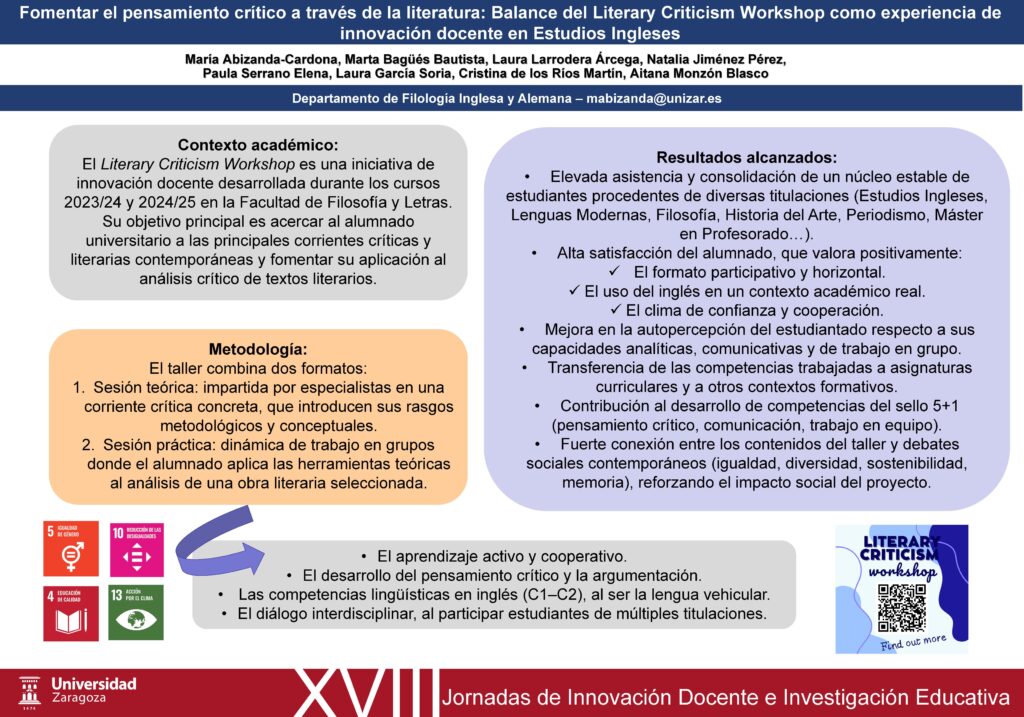
The poster, entitled “Fostering Critical Thinking through Literature: Assessing the Literary Criticism Workshop as a Teaching Innovation Experience in English Studies,” was developed collaboratively by a group of PhD students in Literature from the Department of English and German Studies. Its aim was to present and analyze the outcomes of our three-year ongoing teaching innovation project, which has been exploring how literary studies can be used as a powerful tool to enhance students’ critical thinking, interpretive skills, and reflective engagement.

At the core of the project lies the Literary Criticism Workshop, an innovative teaching model that places students in an active role as critics and interpreters of literary texts. Rather than approaching literature as a set of fixed meanings, the workshop encourages students to debate, question, and construct arguments collectively, helping them to develop key transversal skills such as critical reasoning, analytical writing, and collaborative learning.

The poster session provided an excellent opportunity to share our results with colleagues from different disciplines and institutions, and to reflect on how teaching innovation projects like this one can respond to the evolving demands of higher education. The interest generated during the session confirmed the relevance of literature-based pedagogies for fostering deeper forms of learning in today’s university classroom.

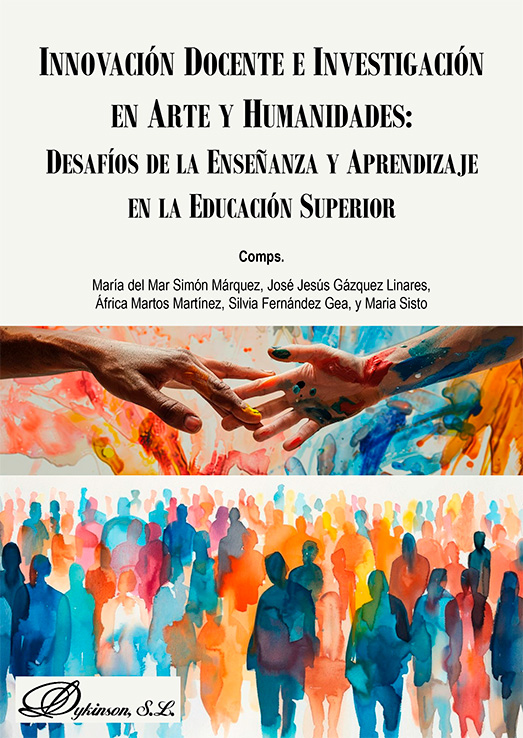
Publication volume Innovación docente e investigación en arte y humanidades: desafíos de la enseñanza y aprendizaje en la educación superior

New publications alert!

The volume Innovación docente e investigación en arte y humanidades: desafíos de la enseñanza y aprendizaje en la educación superior is now out, with several contributions by our team members!

All our team members’ contributions tackle educational innovation from the perspective of critical posthumanism and digital technologies.

Our co-PI Sonia Baelo-Allué tackles the teaching of literature from a posthumanist pedagogy in the chapter “La enseñanza de la literatura norteamericana contemporánea desde una perspectiva posthumana: Una propuesta didáctica”.

Miriam Fernández-Santiago puts forward another didactic proposal for the literature classroom in the chapter “El alumnado posthumano frente al replicante digital: Uso del Chat GPT en la enseñanza de ensayos en educación superior”.

Rubén Peinado-Abarrio presents an activity proposal centered on creative writing in the chapter “Taller de escritura creativa electrónica como actividad extraescolar para el Grado en Estudios Ingleses”.

Ana Chapman explores virtual student exchanges from a posthumanist perspectives in the chapter “La Descorporealización Posthumana en Actividades Colaborativas en Intercambios Virtuales en la Enseñanza Universitaria”.

Our predoctoral student Laura Larrodera-Árcega explores the use of the epistolar genre in the literature classroom in “Creando redes posthumanas y espacios de vulnerabilidad a través de lo epistolar en el aula de literatura”.

Our predoctoral researcher María Abizanda-Cardona articulates a posthumanist approach to 21st century skills in the chapter “Una aproximación a las habilidades del siglo XXI en el aula EFL desde la pedagogía posthumanista”.

Acess the volume for free here!

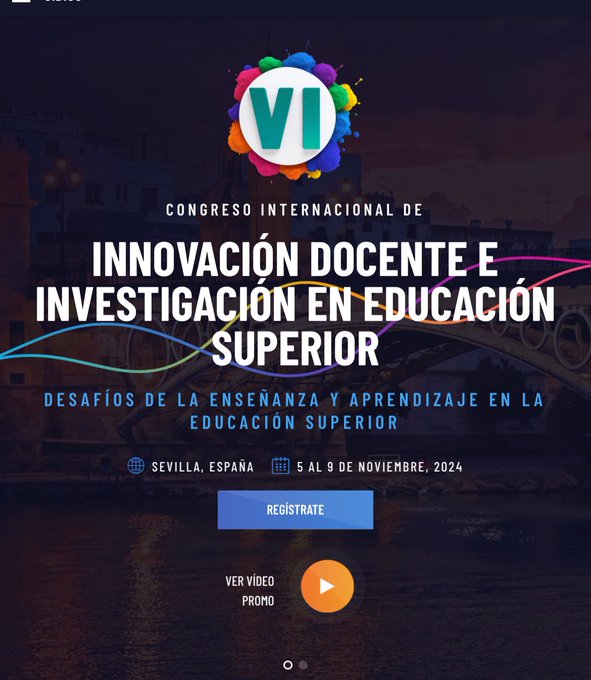
VI CIDICO

This week, our team members have taken part in the VI Congreso Internacional de Innovación Docente e Investigación en Educación Superior “Desafíos de la Enseñanza y Aprendizaje en la Educación Superior”.

Our team members delivered their papers in the symposium “El impacto de los enfoques pedagógicos post humanistas y las herramientas digitales en la enseñanza de las humanidades”.

Miriam Fernández-Santiago delivered the paper “El alumnado posthumano frente al replicante digital: uso del Chat GPT en la enseñanza de elaboración de ensayos”.

María Abizanda-Cardona delivered the paper “Una aproximación a las habilidades del siglo XXI en el aula EFL desde la pedagogía posthumanista”.

Ana Chapman delivered the paper “La descorporealización posthumana en actividades colaborativas en intercambios virtuales en la enseñanza universitaria”.

Laura Larrodera delivered the paper “Creando redes posthumanas y espacios de vulnerabilidad a través de lo epistolar en el aula de literatura”.

Rubén Peinado-Abarrio delivered the paper “Taller de escritura creativa electrónica como actividad extracurricular para el Grado en Estudios Ingleses”.

Lastly, Sonia Baelo-Allué delivered the paper “La enseñanza de la literatura norteamericana contemporánea desde una perspectiva posthumana: una propuesta didáctica”.

#CIDICOVI was a great forum for applying the insights of our research on posthumanism into education and sharing our thoughts and perspectives on innovation. Our team members have for sure food for thought!