Welcome to the website of the research projects «The Posthuman Wound: Subject and Agency in the North American Literature of the 21st Century» (PID2022-137627NB-I00. 2023-2026), «Contemporary North American Fiction and the 4th Industrial Revolution: From Posthumanity to Privation and Social Change» (PID2019-106855GB-I00. 2020-2023) and «Trauma, Culture and Posthumanity: The Definition of Being in Contemporary American fiction» (FFI2015-63506-P. 2016-2020).
The book brings together academic research, literature, and ethical engagement with the more-than-human world, translating ideas from critical posthumanism into an accessible and meaningful story for children.
Inspired both by her research and by her personal experience as a mother, the book emerges from a desire to encourage values of respect, interdependence, and care toward all beings and environments with which we coexist.
This project is a wonderful example of how university research can engage with artistic creation and reach audiences beyond academia. Through storytelling and imagination, the book invites readers to reflect on our relationship with the world and on the importance of building more sustainable and empathetic futures.
We would also like to congratulate illustrator @eimoncayo, whose artwork beautifully brings the story to life, and the publisher @babidibulibros for supporting this project.
We are proud to see how the ideas explored within our research group continue to find new forms of cultural and social impact.
We are delighted to announce the publication of a new book chapter by Rubén Peinado-Abarrio in Women Who Write Animals, published by Brill.
Titled “An Animal State”: the Human-Dog Entity in Drifts (2020), the chapter offers a compelling posthumanist reading of Zambreno’s novel, centring on the intimate relationship between the autodiegetic narrator and her dog, Genet. Through this bond, the study explores how the text gestures toward a human–dog assemblage that challenges conventional distinctions between human and more-than-human animals.
Drawing on critical posthumanist and feminist frameworks, the chapter examines how experiences such as pregnancy, care, and cohabitation lead to a dissolution of bounded subjectivity. In particular, it engages with the concept of “decreation” to show how the narrator’s sense of self is reconfigured through relationality and shared affect. The domestic space emerges as a multispecies community in which meaning is produced collectively, rather than through hierarchical or utilitarian human–animal relations.
By foregrounding the animal subject and its entanglement with human experience, this work contributes to ongoing debates in posthumanist theory, animal studies, and feminist literary criticism. It also highlights how literary form itself can become a site for imagining alternative modes of being and belonging.
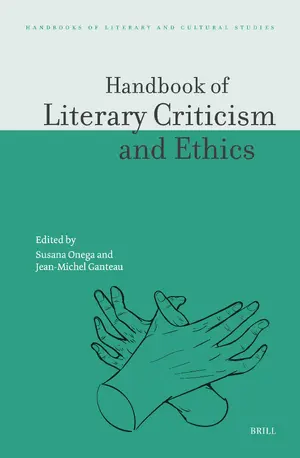
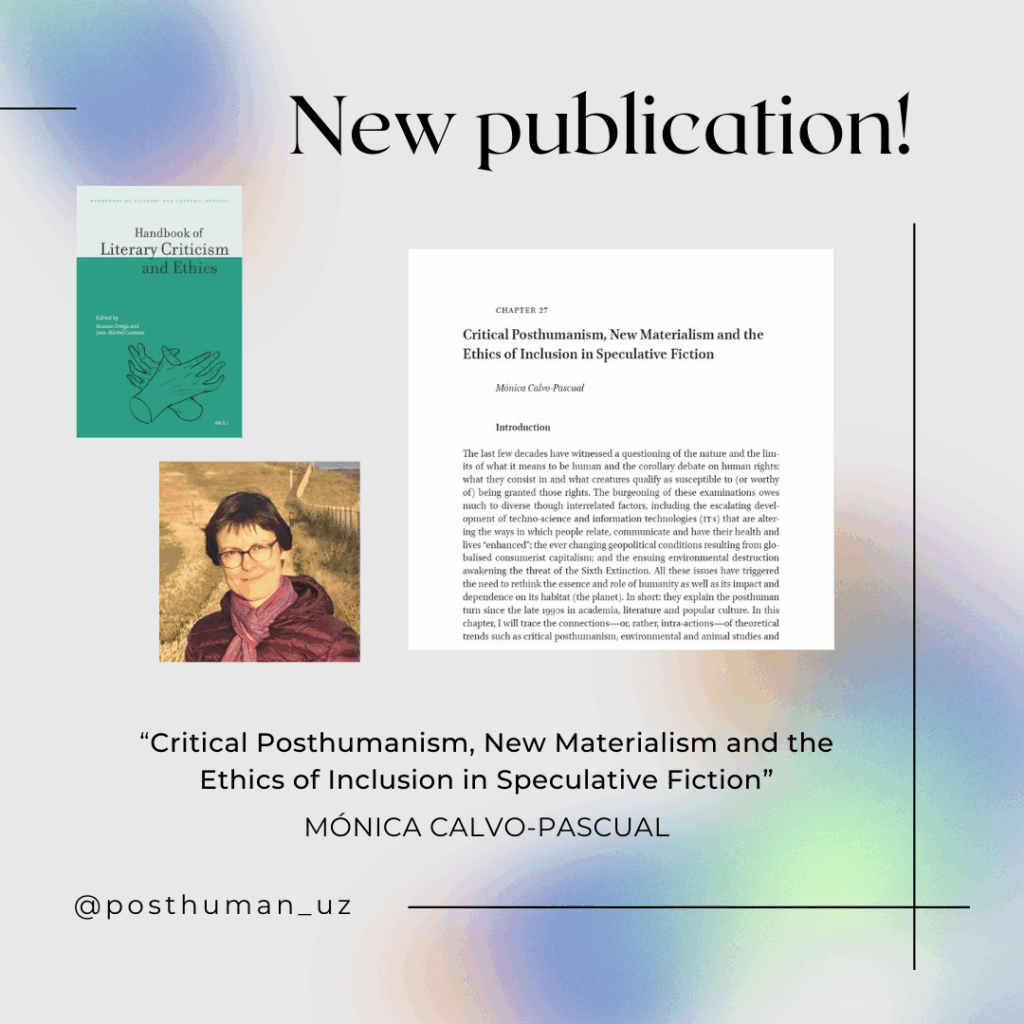
We are delighted to announce that our Principal Investigators, Sonia Baelo-Allué and Mónica Calvo-Pascual, have published two Open Access chapters in the Handbook of Literary Criticism and Ethics (Brill).
This reference volume brings together leading international scholars to examine the intersections between literature and ethics across historical periods, theoretical traditions, and emerging critical paradigms. The contributions by our PIs engage directly with one of the most pressing intellectual developments of our time: the posthuman turn.
The chapter examines how techno-human assemblages challenge traditional binaries between human and machine, self and other, organic and artificial. Through the analysis of contemporary literature, it addresses key debates surrounding human enhancement, artificial intelligence, distributed cognition, and the reconfiguration of posthuman identity. Literature, the chapter argues, becomes a crucial site for negotiating the ethical dilemmas emerging from the blurring of the human and the technological other.
Engaging with critical posthumanism, environmental and animal studies, and new materialism, the chapter foregrounds an ethics of inclusion grounded in post-anthropocentric understandings of agency and responsibility. The analytical section focuses on speculative fiction by Larissa Lai and Rivers Solomon, demonstrating how contemporary narratives imagine alternative relational futures in response to ecological degradation and the threat of the Sixth Extinction.
Taken together, these two chapters highlight the centrality of literature in shaping ethical reflection in times of technological acceleration and environmental crisis. They contribute significantly to ongoing debates in posthumanist theory, literary ethics, artificial intelligence studies, and the environmental humanities.
We warmly congratulate Sonia Baelo-Allué and Mónica Calvo-Pascual on these outstanding contributions to the field.
We are thrilled to announce the publication of a special issue on Posthumanism in Estudios Norteamericanos, edited by our very own Rubén Peinado Abarrio and Ana Chapman. This issue brings together cutting-edge research that interrogates the limits of humanism, the ethics of emerging technologies, and the complex entanglements of humans, nonhumans, and machines in contemporary culture.
Several members of our research team have contributed outstanding articles to this issue. Here’s a closer look at their work:
1. Critical Perspectives on the Already Posthuman World – Rubén Peinado Abarrio & Ana Chapman This introduction to the special issue frames posthumanism not as a futuristic abstraction but as a lens to analyze present realities. It explores how posthuman theory reshapes our understanding of bodies, technology, and identity. 🔗 Read the full article
2. Black Utopia and Body Agency in Rivers Solomon’s An Unkindness of Ghosts – Mónica Calvo Pascual Mónica’s article examines how Solomon’s novel imagines alternative social and bodily arrangements, highlighting non-normative identities, kinship, and posthuman relationality. It’s a vital contribution to discussions on Black utopian futures and speculative fiction. 🔗 Read the full article
This special issue provides a rich, multi-faceted exploration of posthumanism, demonstrating how the field continues to reshape literary studies, critical theory, and cultural analysis. From queer and Black utopian futures to ecological crises and the ethics of technological entanglements, the contributions highlight the diverse ways posthumanism challenges and extends our understanding of the human in the contemporary world.
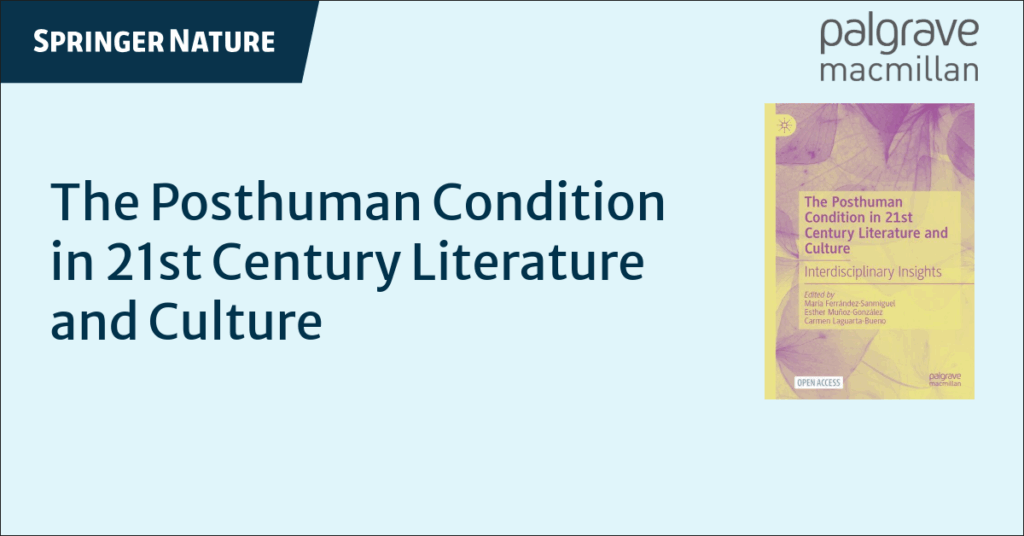
We are delighted to announce the publication of The Posthuman Condition in 21st Century Literature and Culture: Interdisciplinary Insights (Palgrave Macmillan, 2025), which our team members María Ferrández-Sanmiguel, Esther Muñoz-González, Carmen Laguarta-Bueno have co-edited.
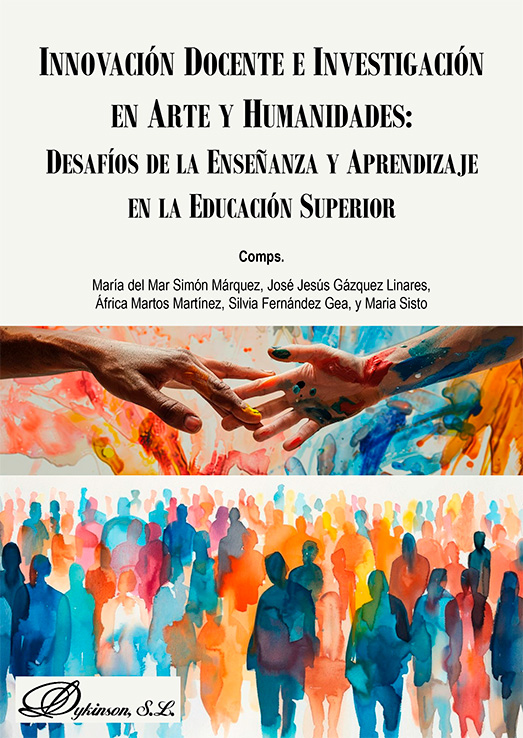
All our team members’ contributions tackle educational innovation from the perspective of critical posthumanism and digital technologies.
Our co-PI Sonia Baelo-Allué tackles the teaching of literature from a posthumanist pedagogy in the chapter “La enseñanza de la literatura norteamericana contemporánea desde una perspectiva posthumana: Una propuesta didáctica”.
Miriam Fernández-Santiago puts forward another didactic proposal for the literature classroom in the chapter “El alumnado posthumano frente al replicante digital: Uso del Chat GPT en la enseñanza de ensayos en educación superior”.
Rubén Peinado-Abarrio presents an activity proposal centered on creative writing in the chapter “Taller de escritura creativa electrónica como actividad extraescolar para el Grado en Estudios Ingleses”.
Ana Chapman explores virtual student exchanges from a posthumanist perspectives in the chapter “La Descorporealización Posthumana en Actividades Colaborativas en Intercambios Virtuales en la Enseñanza Universitaria”.
Our predoctoral student Laura Larrodera-Árcega explores the use of the epistolar genre in the literature classroom in “Creando redes posthumanas y espacios de vulnerabilidad a través de lo epistolar en el aula de literatura”.
Our predoctoral researcher María Abizanda-Cardona articulates a posthumanist approach to 21st century skills in the chapter “Una aproximación a las habilidades del siglo XXI en el aula EFL desde la pedagogía posthumanista”.
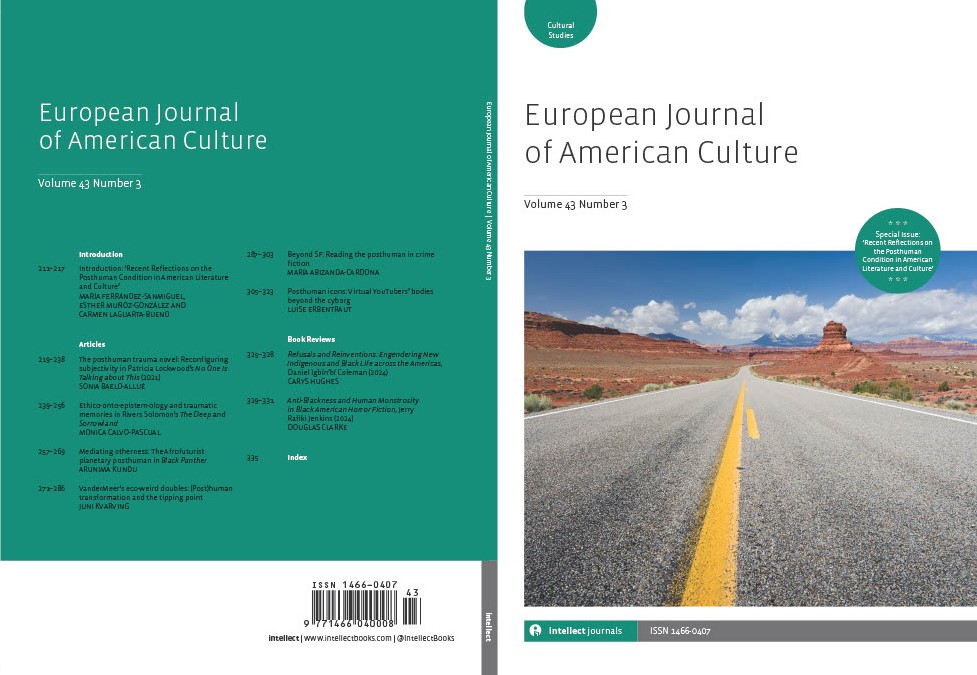
Our co-PI Sonia Baelo-Allué contributes the article “The posthuman trauma novel: Reconfiguring subjectivity in Patricia Lockwood’s No One Is Talking about This (2021)”. Check it out here!
Our co-IP Mónica Calvo-Pascual contributes the article “Ethico-onto-epistem-ology and traumatic memories in Rivers Solomon’s The Deep and Sorrowland”. Access it here!
Our predoctoral student María Abizanda-Cardona presents part of her thesis research in the article “Beyond SF: Reading the posthuman in crime fiction”. Take a look here!
Plus, the special issue is introduced by our team members Esther Muñoz-González, María Ferrández-San Miguel and Carmen Laguarta-Bueno, who’ve done a fantastic job at putting together the volume. Check it out here.
Definitely an interesting publication for researchers interested in critical posthumanism in literature.
The edited volume Representing Vulnerabilities in Contemporary Literature has just been published by Routledge. Co-edited by our team member Miriam Fernández-Santiago, it includes contributions by Francisco Collado-Rodríguez, Sonia Baelo-Allué and Mónica Calvo-Pascual (“Vulnerability and Risk in Larissa Lai’s Critical Dystopias”), among others.
The Introduction and the chapters by Sonia Baelo-Allué (“Technological vulnerability in the Fourth Industrial Revolution”), Francisco Collado-Rodríguez (“When Immortality Becomes a Burden”), and Mónica Calvo-Pascual (“Vulnerability and Risk in Larissa Lai’s Critical Dystopias”) are available open access here. Read also the abstract and see the full table of contents.




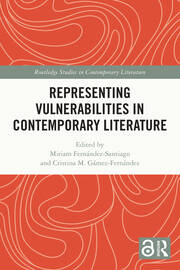 The edited volume Representing Vulnerabilities in Contemporary Literature has just been published by Routledge. Co-edited by our team member Miriam Fernández-Santiago, it includes contributions by Francisco Collado-Rodríguez, Sonia Baelo-Allué and Mónica Calvo-Pascual (“Vulnerability and Risk in Larissa Lai’s Critical Dystopias”), among others.