
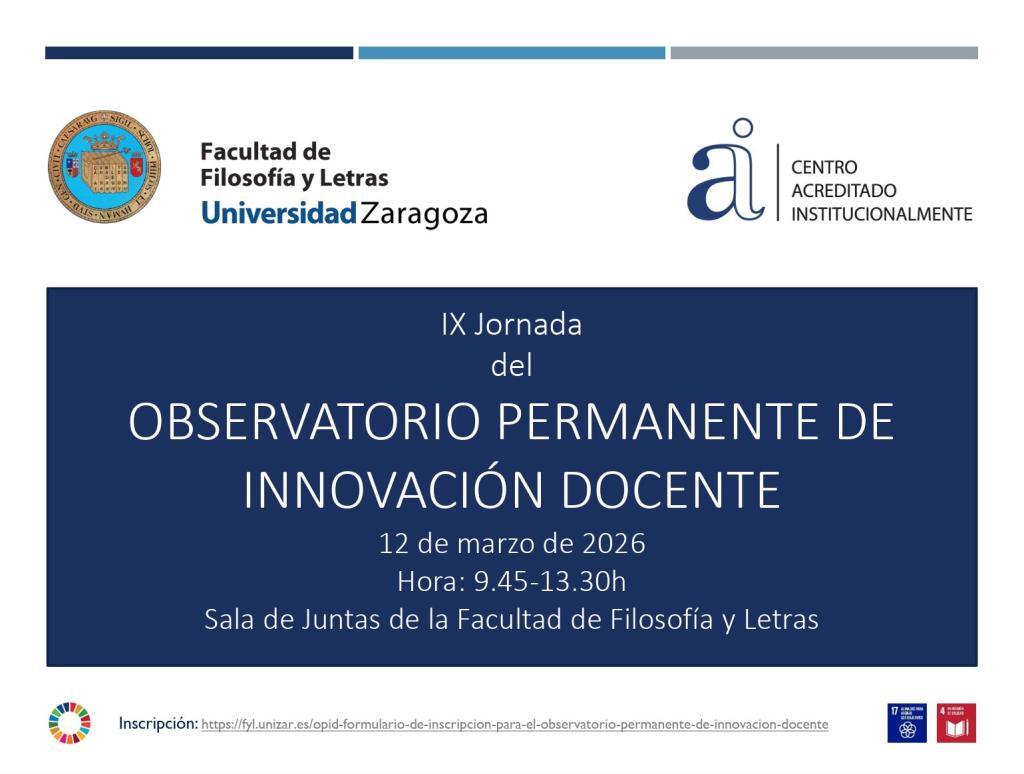
Our research team recently participated in the IX Jornadas del Observatorio Permanente de Innovación Docente, organized at the Universidad de Zaragoza. The event brings together faculty members interested in sharing experiences and best practices in university teaching, particularly those that integrate research and pedagogical innovation.
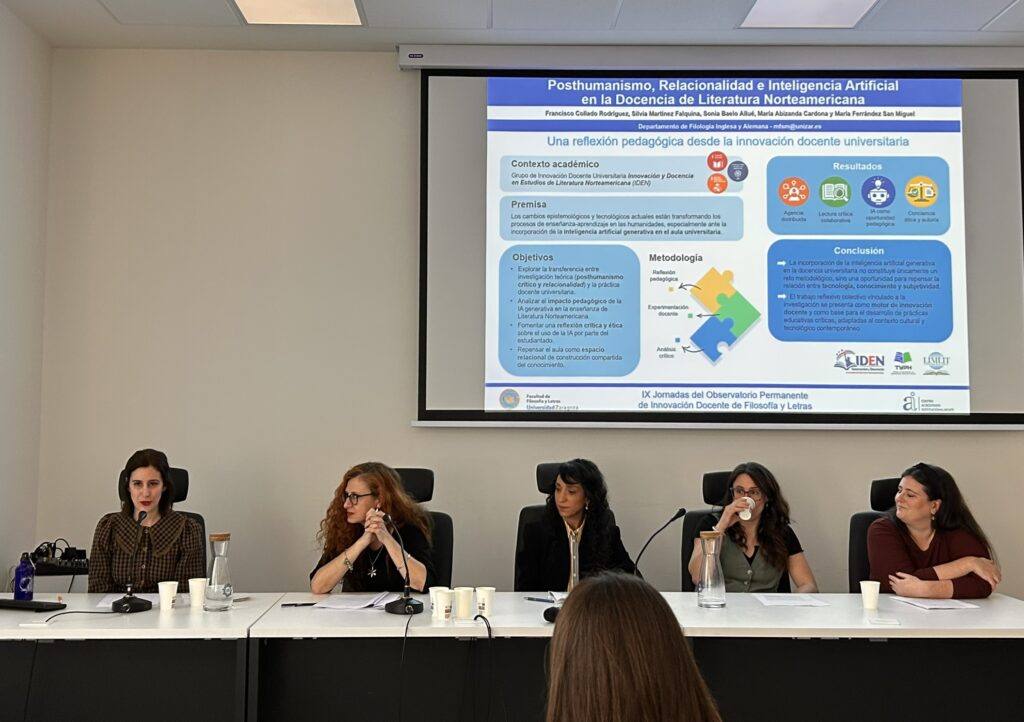
During the poster session, our colleagues M. Ferrández, S. Martínez, S. Baelo, M. Abizanda, and F. Collado presented the contribution: “Posthumanismo, relacionalidad e Inteligencia Artificial en la docencia de literatura norteamericana: una reflexión pedagógica desde la innovación docente universitaria.”
The poster reflects on how emerging theoretical and technological frameworks can reshape literature teaching in higher education. Drawing on posthumanist thought, the project explores relational approaches to knowledge that challenge anthropocentric models of learning and emphasize interconnectedness between humans, technologies, and cultural texts.
At the same time, the proposal considers the growing presence of artificial intelligence tools in the classroom and reflects on how they may be integrated critically into the teaching of American literature. Rather than treating AI merely as a technological aid, the project frames it as a pedagogical opportunity: a way to foster critical thinking, collaborative interpretation, and reflexive engagement with digital tools.
Participating in these jornadas offered a valuable space for dialogue with colleagues across disciplines and reaffirmed the importance of collective reflection on the future of university teaching.