Our Research Group at The Poetics and Politics of Literary Assemblages (University of Málaga, 18–20 May 2026)

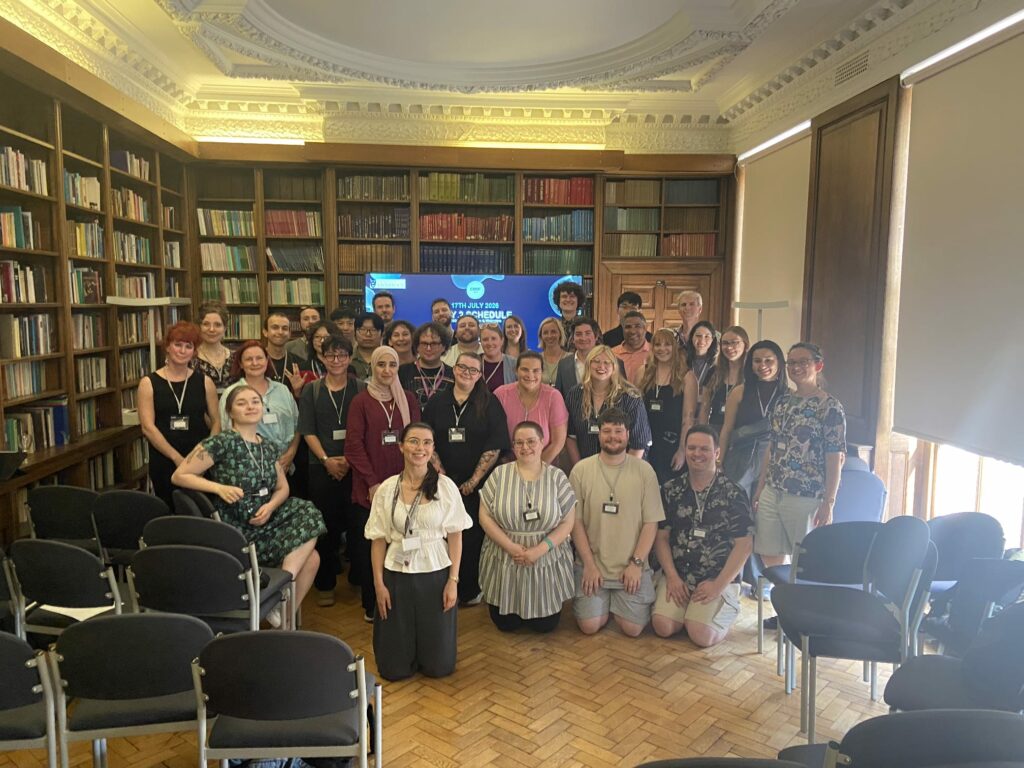
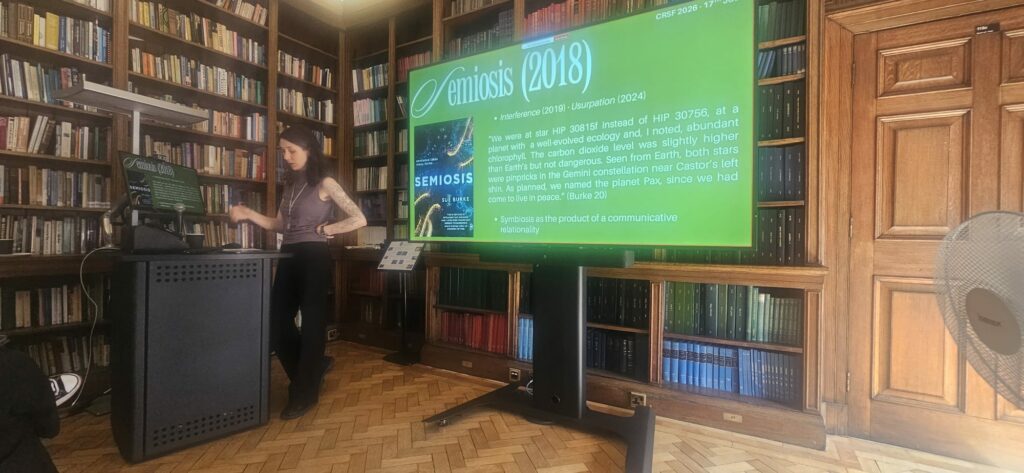
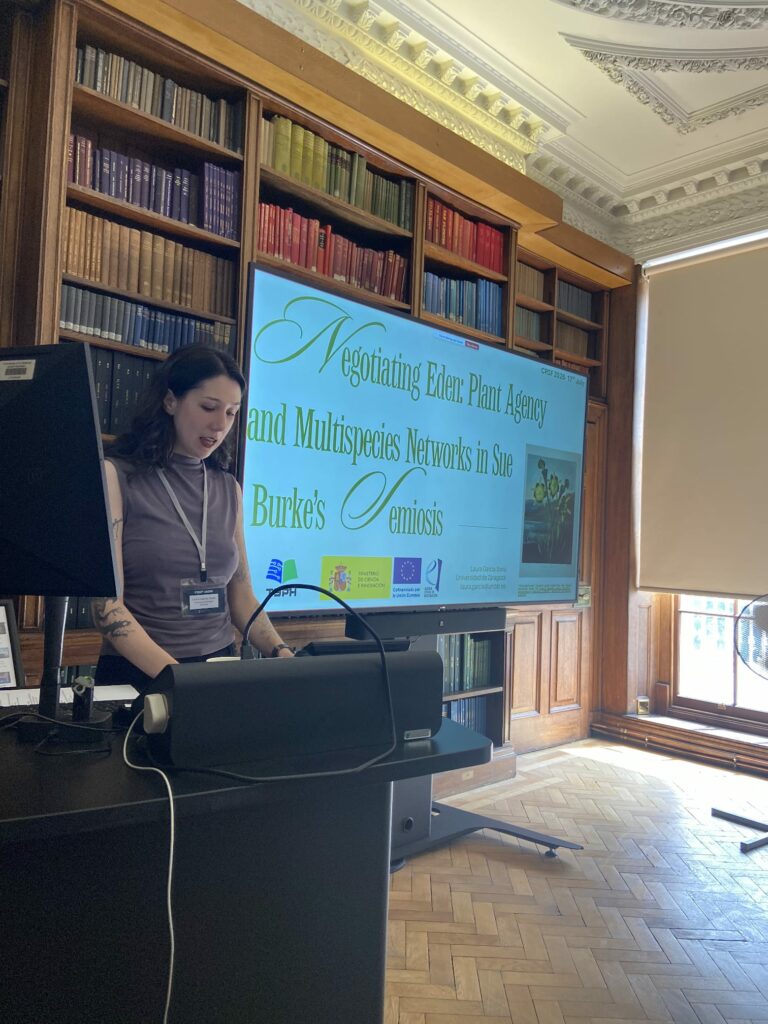
We are delighted to share that several members of our research group have taken part in the international conference The Poetics and Politics of Literary Assemblages, hosted by the University of Málaga. This event brings together scholars working at the intersection of literary studies, assemblage theory, posthumanism, and contemporary critical thought.

Across the three days of the conference, our team will contribute to key discussions on posthuman subjectivity, care, narrative experimentation, and more-than-human relationality. Below is a list of our members’ papers, presented in order of appearance in the programme.


Mónica Calvo Pascual

“Complexity, Self-Organization and More-than-human Assemblages in Rivers Solomon’s Sorrowland
In this paper, Calvo Pascual examines the intersections of complexity theory and posthumanism, analysing how Sorrowland articulates non-human agency and emergent forms of relationality.


Ana Chapman

“Dreams and Sleep in Contemporary Science-Fiction: An Aesthetic Response to the Fear of Techno-Human Assemblages”
Chapman explores how contemporary science fiction mobilises dreamscapes and sleep as narrative strategies to engage with anxieties surrounding techno-human entanglements.


María Abizanda-Cardona

“‘I was a collage myself, flesh and machine’: Posthuman Assemblages of Care in Lincoln Michel’s The Body Scout (2021)”
This paper analyses the articulation of care within posthuman frameworks, focusing on embodiment, vulnerability, and relationality in Michel’s biocapitalist dystopia.


Sonia Baelo Allué

“Assembling Trauma: Human-Machine Narrative Entanglements in Vauhini Vara’s ‘Ghosts’”
Baelo Allué examines how trauma is mediated through digital and algorithmic forms, foregrounding the entanglement of human experience and machine-generated narrative.


Esther Muñoz González

“The Möbius Loop as Narrative Form in Catherine Lacey’s The Möbius Book
This paper investigates the Möbius loop as a structural and conceptual device, highlighting its implications for narrative temporality, selfhood, and textual assemblage.


Miriam Fernández Santiago

“Sharpening the Terminological Apparatus for Posthuman Assemblages”
Fernández Santiago offers a theoretical intervention aimed at refining and clarifying the conceptual vocabulary used in posthuman assemblage studies.


Lucía Bennett Ortega

“The Shape of Memory at the Edge of the Human in Richard Powers’ Playground (2024)”
Bennett Ortega explores the representation of memory in relation to ecological and posthuman concerns, analysing how Powers’ novel reimagines cognition beyond the human.

Exploring the History and Myths of Crime Fiction at the XIII Festival Aragón Negro

On May 15, our research team had the pleasure of participating in the XIII edition of the Festival Aragón Negro with the lecture “Crime Fiction Through History: Milestones and Myths”, delivered by our predoctoral researcher and team member María Abizanda-Cardona. The event offered a valuable opportunity to reflect on the historical evolution of crime fiction and its enduring relevance within contemporary cultural and academic debates.

Hosted in collaboration with the Comarca Campo de Daroca and the Fundación Campo de Daroca, the session brought together readers, students, and members of the local community for an engaging discussion on the development of the genre, its most influential authors, and some of the myths that continue to shape public perceptions of crime fiction today.

Throughout the lecture, attendees explored how crime fiction has evolved from classic detective narratives to contemporary noir and speculative crime fiction, examining the ways in which the genre reflects social anxieties, political tensions, technological change, and ethical dilemmas across different historical periods. Particular attention was given to the idea that crime fiction has never been “just entertainment,” but rather a literary form deeply connected to questions of justice, power, inequality, and cultural transformation.

We would like to express our sincere gratitude to the Comarca Campo de Daroca and the Fundación Campo de Daroca for their warm welcome and excellent organization, as well as to the Festival Aragón Negro for continuing to promote spaces dedicated to cultural dissemination, critical dialogue, and public engagement with literature and the humanities.

We are also especially thankful to everyone who attended the event and contributed to the conversation with their questions, reflections, and enthusiasm. It was a genuine pleasure to share this space for dialogue and critical thinking with such an engaged audience.

This activity forms part of our ongoing research on crime fiction as a framework for exploring the social, ethical, and technological challenges that shape contemporary society.

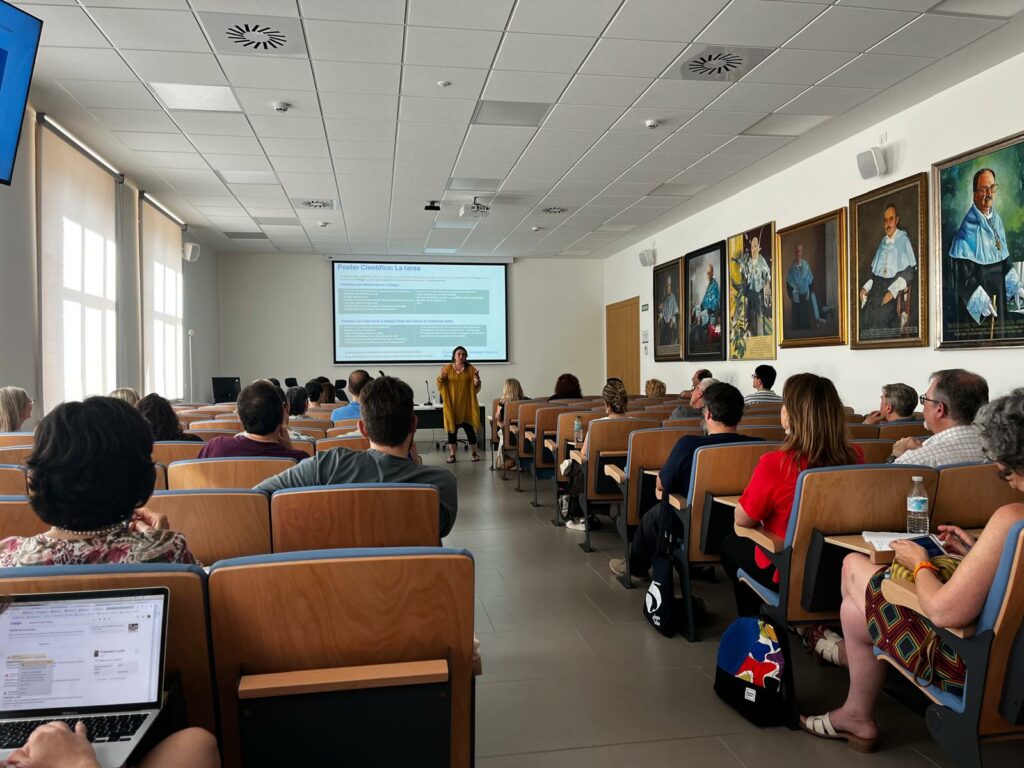
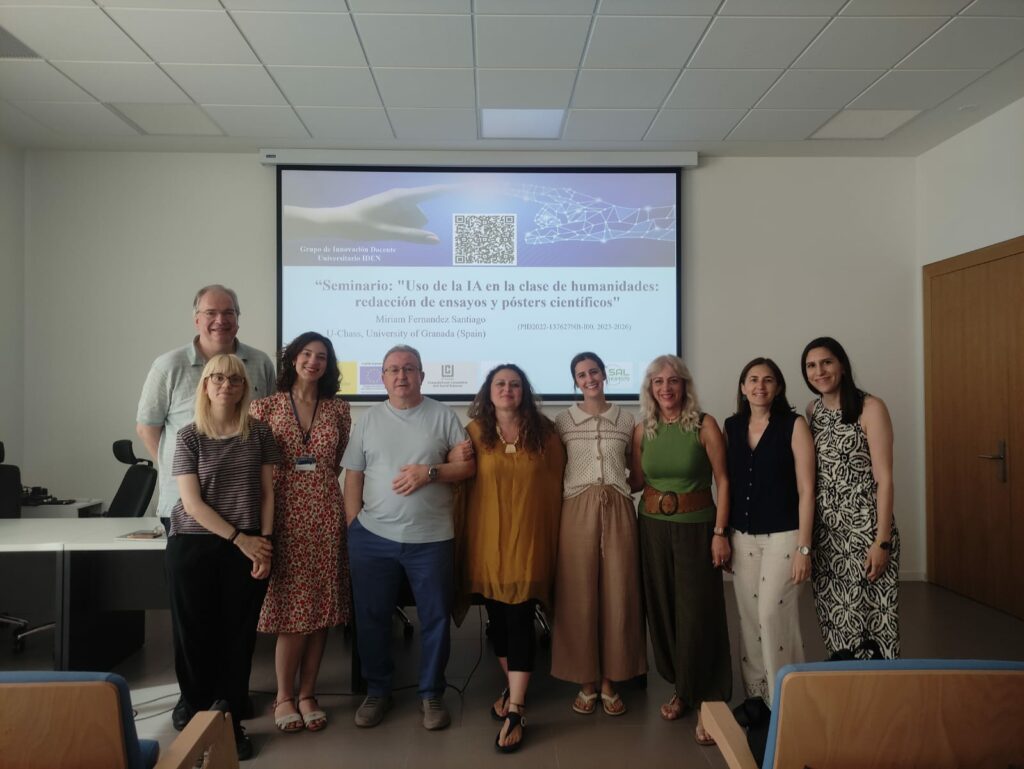
IDEN participa en la X Jornada del Observatorio Permanente de Innovación Docente de la Universidad de Zaragoza

Nuestros investigadores Francisco Collado Rodríguez, María Ferrández San Miguel y María Abizanda Cardona han representado el Grupo de Innovación Docente IDEN (Innovación y Docencia en Estudios de Literatura Norteamericana) en la X Jornada del Observatorio Permanente de Innovación Docente de la Facultad de Filosofía y Letras de la Universidad de Zaragoza.

La jornada, organizada bajo el título “Innovación y Competencias”, reunió a profesorado, estudiantado y grupos de innovación docente en un espacio dedicado al intercambio de experiencias, metodologías y proyectos orientados a la mejora de la enseñanza universitaria. A lo largo de la mañana, las distintas sesiones pusieron de relieve la importancia de la innovación pedagógica, la colaboración interdisciplinar y el desarrollo de competencias clave en el contexto de la educación superior contemporánea.

El GIDU IDEN intervino en la Sesión 2 junto al GIDU INNOLINGUA, compartiendo algunas de las líneas de trabajo e iniciativas que nuestro grupo desarrolla en el ámbito de la innovación docente aplicada a los Estudios de Literatura Norteamericana. La participación en este encuentro ha supuesto una excelente oportunidad para dialogar con otros equipos docentes, conocer nuevas propuestas pedagógicas y seguir fortaleciendo redes de colaboración dentro de la Universidad de Zaragoza.

La jornada contó además con las ponencias invitadas de Sandra Vázquez Toledo y Rubén Rebollar Rubio, así como con la participación de los grupos REFRAME y BRIET, cuyas contribuciones enriquecieron el debate sobre los retos y posibilidades de la docencia universitaria actual.

Desde IDEN queremos agradecer la asistencia y participación de todas las personas que hicieron posible este espacio de encuentro y reflexión. Seguimos trabajando para construir una enseñanza universitaria más innovadora, participativa y conectada con las necesidades del presente.

Nuestra investigadora María Abizanda-Cardona participa en el Festival Aragón Negro 2026

Nos alegra anunciar la participación de nuestra investigadora predoctoral María Abizanda-Cardona en la XIII edición del Festival Aragón Negro, uno de los principales encuentros culturales dedicados al género negro en Aragón.

María impartirá la conferencia titulada “La novela negra en su historia: hitos y mitos”, una actividad centrada en la evolución histórica del género negro y criminal, sus principales referentes y las transformaciones culturales que han marcado su desarrollo hasta la actualidad.

📅 15 de mayo
🕖 19:00 h
📍 Fundación Campo de Daroca

La charla ofrecerá un recorrido por algunos de los momentos clave de la novela negra, reflexionando sobre cómo el género ha servido históricamente para explorar conflictos sociales, desigualdades, violencia, corrupción y cambios culturales. Asimismo, se abordarán algunos de los mitos y estereotipos más extendidos en torno a la literatura noir y su presencia contemporánea.

Esta actividad constituye una excelente oportunidad para acercar la investigación académica al público general y fomentar el diálogo entre universidad, cultura y sociedad a través de la divulgación humanística y la transferencia de conocimiento.

La programación completa del festival, que se celebrará del 5 de mayo al 16 de junio, puede consultarse en la web oficial del evento: Festival Aragón Negro

Desde el grupo queremos felicitar a María por esta participación y animar a todas las personas interesadas en la literatura y la cultura noir a asistir a la conferencia.

Our Research Group at SEING VI (Universidad de Zaragoza, May 2026)

We are pleased to announce that several members of our research group will participate in the VI Seminar in English Studies (SEING VI), hosted by the Universidad de Zaragoza. This doctoral seminar provides a valuable platform for early-stage researchers to present their work, exchange ideas, and engage with current debates in English Studies .

Under the theme “Research as Resistance in a World at Odds,” this year’s edition foregrounds the role of academic inquiry in responding to contemporary global challenges . Our team contributes to these discussions through papers that address surveillance, race, posthumanism, and the limits of representation.

Below is a list of our members’ papers:


Javier Álvarez

Rethinking Utopia in Times of Crisis: Posthuman Ethics and Alternative Futures in Contemporary Fiction”.

María Abizanda-Cardona

“Big Brother meets big business: The Biopolitics of Surveillance Capitalism in Rob Hart’s The Warehouse (2019)”
This paper examines the convergence of corporate power and surveillance technologies, analysing how Hart’s novel depicts the datafication of subjectivity and the expansion of biopolitical control under late capitalism.


Aurora Rodríguez Bermejo Fraile

“Gothic Themes and the Black Body in Rivers Solomon’s Model Home
Rodríguez Bermejo Fraile explores how contemporary Gothic reconfigures racialised embodiment, foregrounding the intersections of horror, identity, and systemic oppression.


Laura García Soria

“‘No use living without delight’: Virtual Unreality and Vulnerable Materiality in Ursula K. Le Guin’s Paradises Lost (2002)”
This paper investigates the tension between virtuality and embodiment, analysing how Le Guin reasserts material vulnerability in speculative narratives of simulated experience.


Alessandra Martín González

“Posthuman Shapeshifting: Blurring the Boundaries Between Human and Nonhuman in Nnedi Okorafor’s Lagoon
Martín González examines shapeshifting as a posthuman strategy that destabilises fixed ontologies and reimagines human–nonhuman relations within Afrofuturist frameworks.


Marta Hernández González

“Nonhuman Biography and the Limits of Representation in Karen Joy Fowler’s We Are All Completely Beside Ourselves
This paper addresses the challenges of narrating nonhuman lives, interrogating the ethical and epistemological limits of representation in literary depictions of animal subjectivity.

Our group’s participation in SEING VI highlights our ongoing engagement with contemporary critical theory and interdisciplinary approaches to literature. By addressing issues such as surveillance, embodiment, and posthuman relationality, these papers contribute to broader conversations about the role of the humanities in a rapidly changing world.

We look forward to an enriching exchange of ideas in Zaragoza.

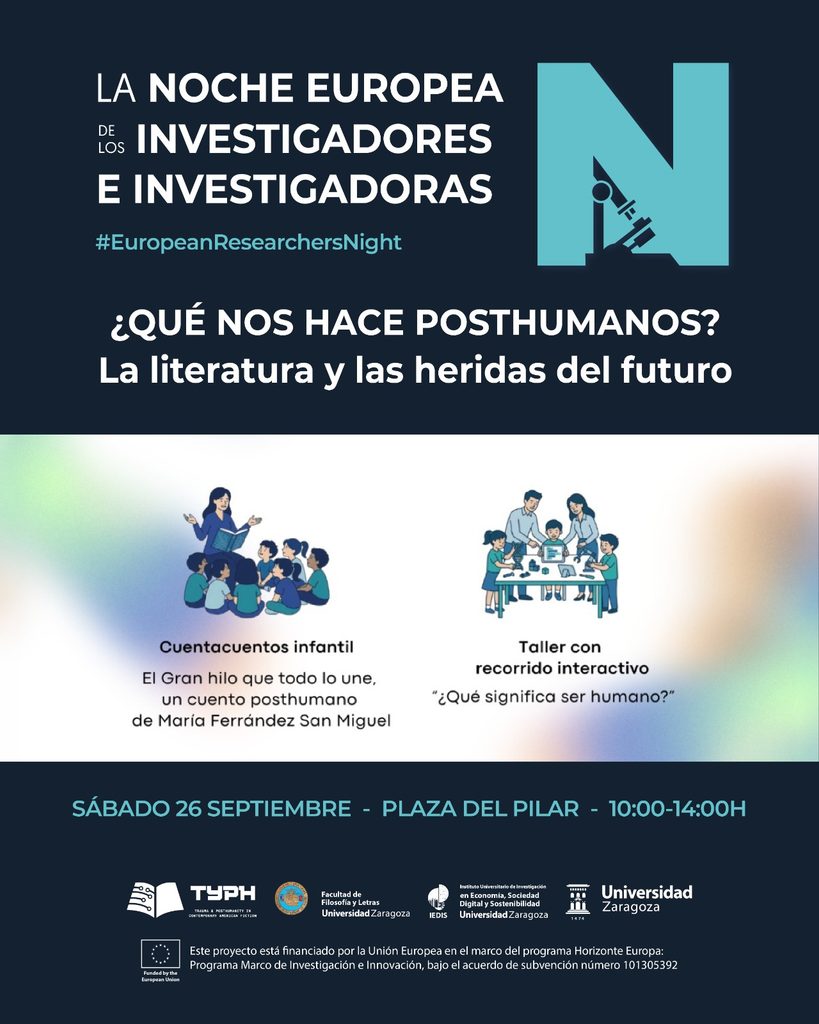
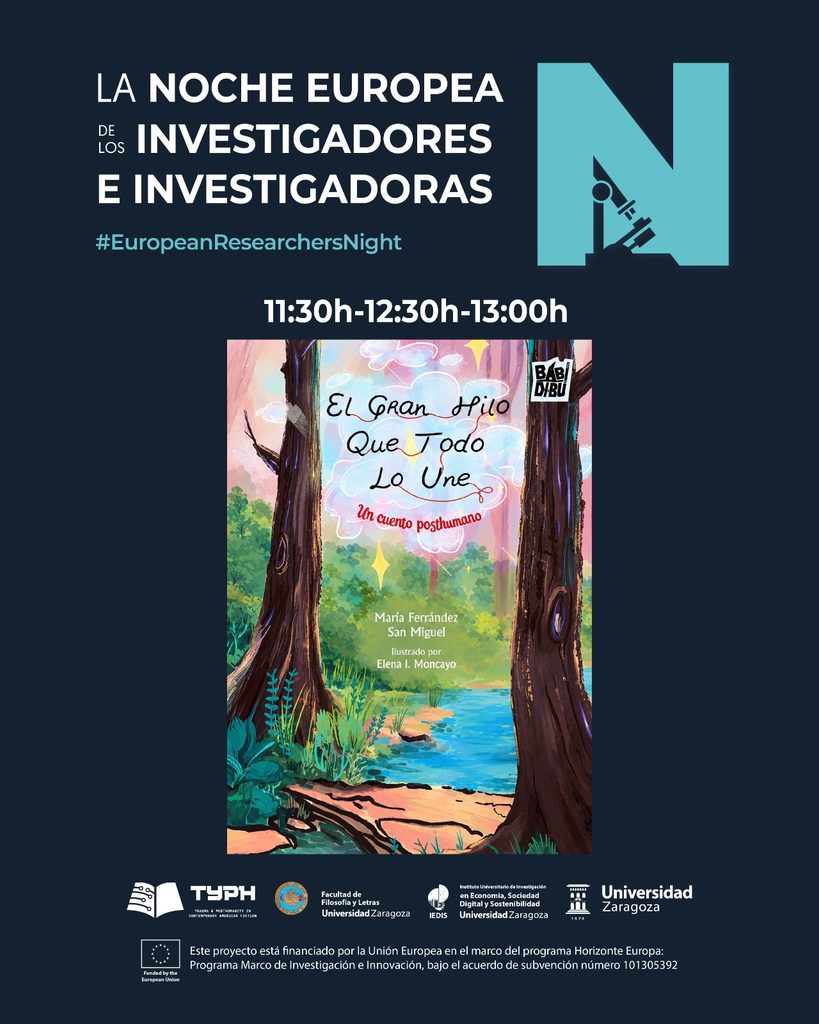
El Gran hilo que todo lo une, un cuento posthumano

We are proud to celebrate the publication of El Gran hilo que todo lo une, un cuento posthumano, the new children’s book by our colleague María Ferrández San Miguel.

BUY IT HERE

The book brings together academic research, literature, and ethical engagement with the more-than-human world, translating ideas from critical posthumanism into an accessible and meaningful story for children.

Inspired both by her research and by her personal experience as a mother, the book emerges from a desire to encourage values of respect, interdependence, and care toward all beings and environments with which we coexist.

This project is a wonderful example of how university research can engage with artistic creation and reach audiences beyond academia. Through storytelling and imagination, the book invites readers to reflect on our relationship with the world and on the importance of building more sustainable and empathetic futures.

We would also like to congratulate illustrator @eimoncayo, whose artwork beautifully brings the story to life, and the publisher @babidibulibros for supporting this project.

We are proud to see how the ideas explored within our research group continue to find new forms of cultural and social impact.

New publication

We are delighted to announce the publication of a new book chapter by Rubén Peinado-Abarrio in Women Who Write Animals, published by Brill.

Titled “An Animal State”: the Human-Dog Entity in Drifts (2020), the chapter offers a compelling posthumanist reading of Zambreno’s novel, centring on the intimate relationship between the autodiegetic narrator and her dog, Genet. Through this bond, the study explores how the text gestures toward a human–dog assemblage that challenges conventional distinctions between human and more-than-human animals.

Drawing on critical posthumanist and feminist frameworks, the chapter examines how experiences such as pregnancy, care, and cohabitation lead to a dissolution of bounded subjectivity. In particular, it engages with the concept of “decreation” to show how the narrator’s sense of self is reconfigured through relationality and shared affect. The domestic space emerges as a multispecies community in which meaning is produced collectively, rather than through hierarchical or utilitarian human–animal relations.

By foregrounding the animal subject and its entanglement with human experience, this work contributes to ongoing debates in posthumanist theory, animal studies, and feminist literary criticism. It also highlights how literary form itself can become a site for imagining alternative modes of being and belonging.

🔗 https://doi.org/10.1163/9789004754584-017

We warmly congratulate Rubén on this thoughtful and original contribution!

New Session of the Literary Criticism Workshop

A new session of the Literary Criticism Workshop will take place on Friday, 20 March at 12:00 in Room B3.2 at the Facultad de Filosofía y Letras, Universidad de Zaragoza.

The session, titled “Autotheory and Kate Zambreno’s short story: Insekt or Large Verminous Thing,” will be led by Rubén Peinado Abarrio.

This workshop series provides a collaborative space where students and researchers can engage with different approaches to literary theory and criticism through the discussion of specific texts. In this session, participants will explore the concept of autotheory through the work of contemporary writer and critic Kate Zambreno, whose experimental writing often blurs the boundaries between literary criticism, personal narrative, and creative practice.

The discussion will focus on Zambreno’s short story Insekt or Large Verminous Thing, examining how autotheoretical writing challenges conventional distinctions between scholarship and personal reflection while opening new possibilities for literary analysis.

The Literary Criticism Workshop aims to foster a dynamic and welcoming environment for discussing literature and critical theory.

📍 Location: Room B3.2, Facultad de Filosofía y Letras
🗓 Date: Friday, 20 March 2026
Time: 12:00

The session is open to anyone interested in literature and literary criticism. 📖✨

IX Jornadas del Observatorio Permanente de Innovación Docente

Our research team recently participated in the IX Jornadas del Observatorio Permanente de Innovación Docente, organized at the Universidad de Zaragoza. The event brings together faculty members interested in sharing experiences and best practices in university teaching, particularly those that integrate research and pedagogical innovation.

During the poster session, our colleagues M. Ferrández, S. Martínez, S. Baelo, M. Abizanda, and F. Collado presented the contribution: “Posthumanismo, relacionalidad e Inteligencia Artificial en la docencia de literatura norteamericana: una reflexión pedagógica desde la innovación docente universitaria.”

The poster reflects on how emerging theoretical and technological frameworks can reshape literature teaching in higher education. Drawing on posthumanist thought, the project explores relational approaches to knowledge that challenge anthropocentric models of learning and emphasize interconnectedness between humans, technologies, and cultural texts.

At the same time, the proposal considers the growing presence of artificial intelligence tools in the classroom and reflects on how they may be integrated critically into the teaching of American literature. Rather than treating AI merely as a technological aid, the project frames it as a pedagogical opportunity: a way to foster critical thinking, collaborative interpretation, and reflexive engagement with digital tools.

Participating in these jornadas offered a valuable space for dialogue with colleagues across disciplines and reaffirmed the importance of collective reflection on the future of university teaching.

Call for Papers: Unbound, Unfinished, Ongoing: A Kate Zambreno Symposium

We are pleased to share a Call for Papers for the symposium Unbound, Unfinished, Ongoing: A Kate Zambreno Symposium, a one-day online event dedicated to the work of Kate Zambreno, one of the most distinctive voices in contemporary experimental writing and literary criticism.

The symposium will take place online on 23 October 2026 and is hosted by the Complutense University of Madrid and the University of Zaragoza. The event is organized by literary scholar Rubén Peinado, a member of our research team.

Zambreno’s work—spanning fiction, autofiction, literary criticism, and hybrid writing—has played a significant role in reshaping contemporary discussions around authorship, archives, feminist criticism, and the boundaries between life writing and literary scholarship. This symposium seeks to bring together scholars working on Zambreno’s oeuvre as well as those interested in the broader questions her work raises about contemporary literary culture.

We welcome proposals that engage with topics such as:

  • Autofiction and hybrid literary forms
  • Feminist criticism and experimental writing
  • Archives, fragments, and literary memory
  • Contemporary literary criticism and creative practice
  • The intersections between scholarship and creative writing

Researchers from a wide range of disciplines within literary and cultural studies are encouraged to submit proposals.

🗓 Abstract deadline: 1 July 2026
📅 Symposium date: 23 October 2026
💻 Format: Online

For the full Call for Papers and submission guidelines, please visit:
https://sites.google.com/view/kate-zambreno-symposium/inicio

We warmly encourage colleagues and researchers interested in contemporary experimental literature, feminist criticism, and hybrid writing to consider submitting a proposal and to share this call with their networks.