
We are delighted to announce that our Principal Investigators, Sonia Baelo-Allué and Mónica Calvo-Pascual, have published two Open Access chapters in the Handbook of Literary Criticism and Ethics (Brill).
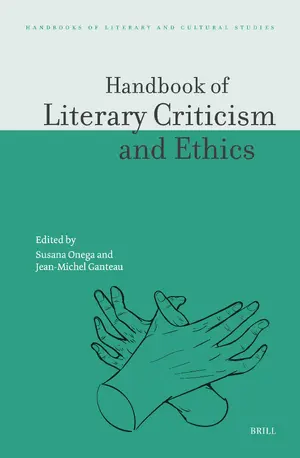
This reference volume brings together leading international scholars to examine the intersections between literature and ethics across historical periods, theoretical traditions, and emerging critical paradigms. The contributions by our PIs engage directly with one of the most pressing intellectual developments of our time: the posthuman turn.

In Chapter 26, “The Ethics and Literature of Cybernetic Posthumanism, Transhumanism and the Technological Other in the Fourth Industrial Revolution” (pp. 616–640), Sonia Baelo-Allué explores the ethical implications of cybernetic posthumanism and transhumanism in an era defined by the convergence of physical, biological, and digital technologies.
The chapter examines how techno-human assemblages challenge traditional binaries between human and machine, self and other, organic and artificial. Through the analysis of contemporary literature, it addresses key debates surrounding human enhancement, artificial intelligence, distributed cognition, and the reconfiguration of posthuman identity. Literature, the chapter argues, becomes a crucial site for negotiating the ethical dilemmas emerging from the blurring of the human and the technological other.
🔗 DOI: https://doi.org/10.1163/9789004715516_028
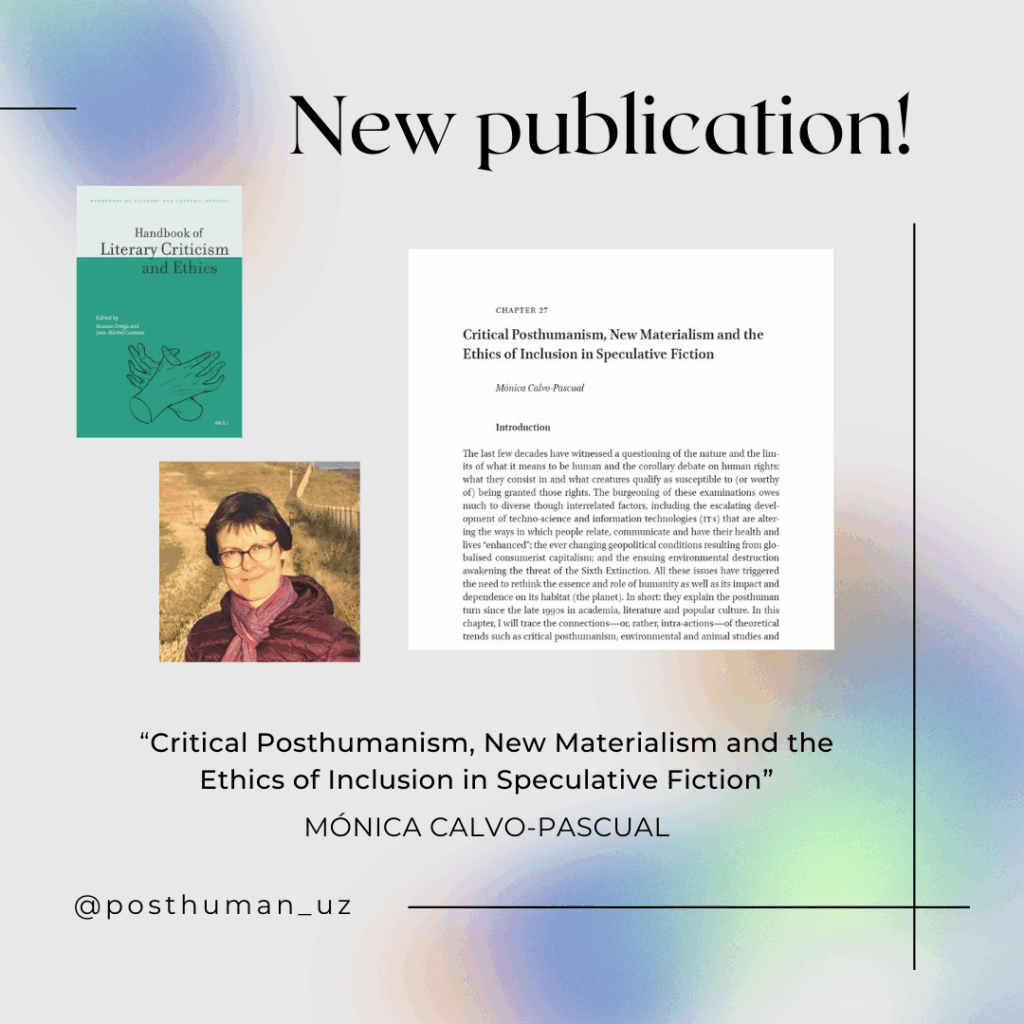
In Chapter 27, “Critical Posthumanism, New Materialism and the Ethics of Inclusion in Speculative Fiction” (pp. 641–664), Mónica Calvo-Pascual situates the posthuman turn within the broader context of escalating techno-scientific development, globalised capitalism, and environmental crisis in the Anthropocene.
Engaging with critical posthumanism, environmental and animal studies, and new materialism, the chapter foregrounds an ethics of inclusion grounded in post-anthropocentric understandings of agency and responsibility. The analytical section focuses on speculative fiction by Larissa Lai and Rivers Solomon, demonstrating how contemporary narratives imagine alternative relational futures in response to ecological degradation and the threat of the Sixth Extinction.
🔗 DOI: https://doi.org/10.1163/9789004715516_029
Taken together, these two chapters highlight the centrality of literature in shaping ethical reflection in times of technological acceleration and environmental crisis. They contribute significantly to ongoing debates in posthumanist theory, literary ethics, artificial intelligence studies, and the environmental humanities.
We warmly congratulate Sonia Baelo-Allué and Mónica Calvo-Pascual on these outstanding contributions to the field.